




The Garden of Gethsemane is one of the most meaningful places in the Christian story. It is where Jesus prayed before His arrest, facing the suffering that lay ahead while remaining faithful to the will of God. This deeply personal moment has inspired generations of artists to create religious sculptures, paintings, reliefs, and other works of sacred art.
Today, Garden of Gethsemane statues can be found in churches, religious gardens, memorial spaces, and private prayer areas. From a solitary figure of Jesus kneeling in prayer to elaborate sculptural groups featuring an angel and the sleeping apostles, these artworks help people connect with an important moment in the New Testament.
Understanding the biblical story, artistic representations, and material choices behind these sculptures can help churches and religious organizations select meaningful works for their spaces.
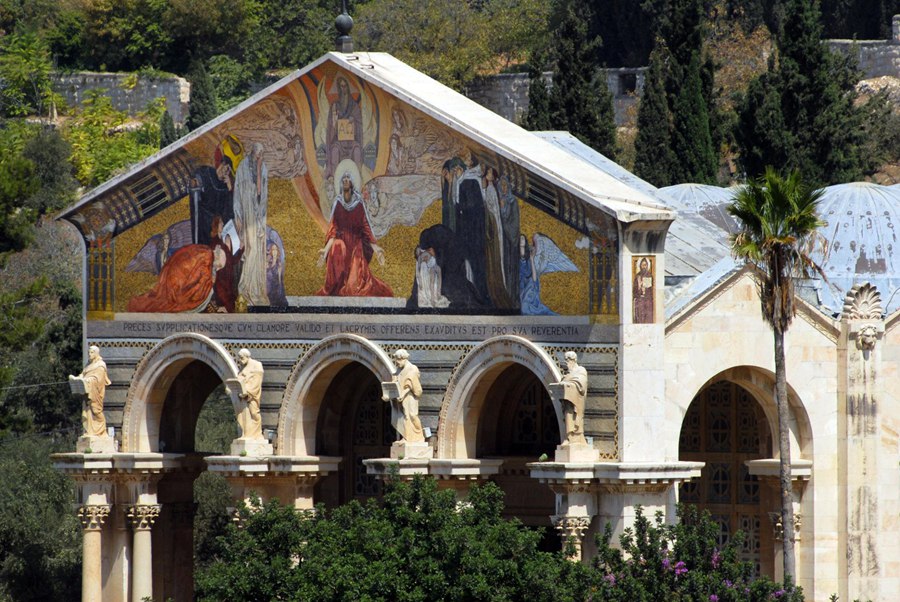
1. What Is the Garden of Gethsemane? The Biblical Story Behind the Statues
The Garden of Gethsemane is traditionally identified as a garden at the foot of the Mount of Olives in Jerusalem. It is closely associated with the events leading to the arrest and crucifixion of Jesus Christ.
According to the Gospels, after the Last Supper, Jesus went with His disciples to a place called Gethsemane. There, He withdrew to pray, knowing that His arrest and suffering were approaching. This moment became one of the most frequently represented scenes in Christian religious art.
Where Is the Garden of Gethsemane Located?
The traditional site of the Garden of Gethsemane lies near the Kidron Valley, at the western foot of the Mount of Olives in Jerusalem.
The name Gethsemane is commonly associated with an olive press, reflecting the area’s historical connection with olive cultivation. Ancient olive trees remain an important part of the site’s identity and religious atmosphere.
For Christians visiting Jerusalem, the garden is a place of prayer, reflection, and pilgrimage. Its quiet surroundings and association with the final hours of Jesus’ earthly life have made it an enduring source of inspiration for religious artists.
Why Did Jesus Pray in the Garden of Gethsemane?
The Gospel accounts describe Jesus praying in Gethsemane after sharing the Last Supper with His disciples.
He asked Peter, James, and John to stay nearby while He went farther into the garden to pray. The Gospels describe His deep sorrow and distress as He faced the suffering ahead. In His prayer, Jesus expressed His desire for the coming ordeal to pass, while ultimately submitting to the will of the Father.
Meanwhile, the disciples struggled to remain awake. Later, Judas arrived with a group of people who came to arrest Jesus.
This scene contains several powerful visual elements that artists have interpreted in different ways: Jesus kneeling alone, the sleeping disciples, the angel offering comfort, and the surrounding olive trees.
The Spiritual Meaning of Gethsemane in Christianity
The Garden of Gethsemane represents several important themes in Christian faith:
-
Prayer: Jesus’ time in the garden demonstrates the importance of prayer during moments of uncertainty and difficulty.
-
Sacrifice: The scene anticipates the suffering and sacrifice associated with the crucifixion.
-
Obedience: Jesus’ prayer expresses His willingness to accept the Father’s will.
-
Hope: Even in a moment of deep sorrow, the story points toward the promise of redemption.
These themes explain why Gethsemane has remained such an important subject in Christian sculpture and religious art.
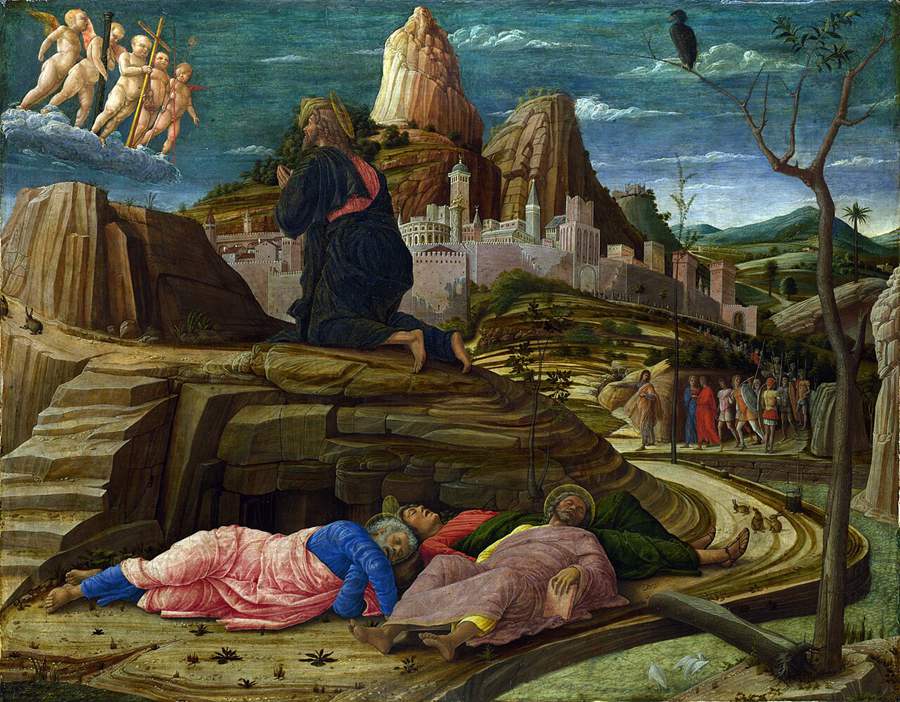 Andrea Mantegna's Agony in the Garden, c. 1460, depicts Jesus praying in the Gethsemane while the disciples sleep and Judas leads the mob.
2. Famous Garden of Gethsemane Statues and Their Religious Meanings
Garden of Gethsemane statues represent more than biblical characters. Their poses, facial expressions, gestures, and composition communicate the emotional and spiritual meaning of the event.
Several artistic interpretations have become particularly recognizable in Christian religious sculpture.
Jesus Praying in the Garden of Gethsemane
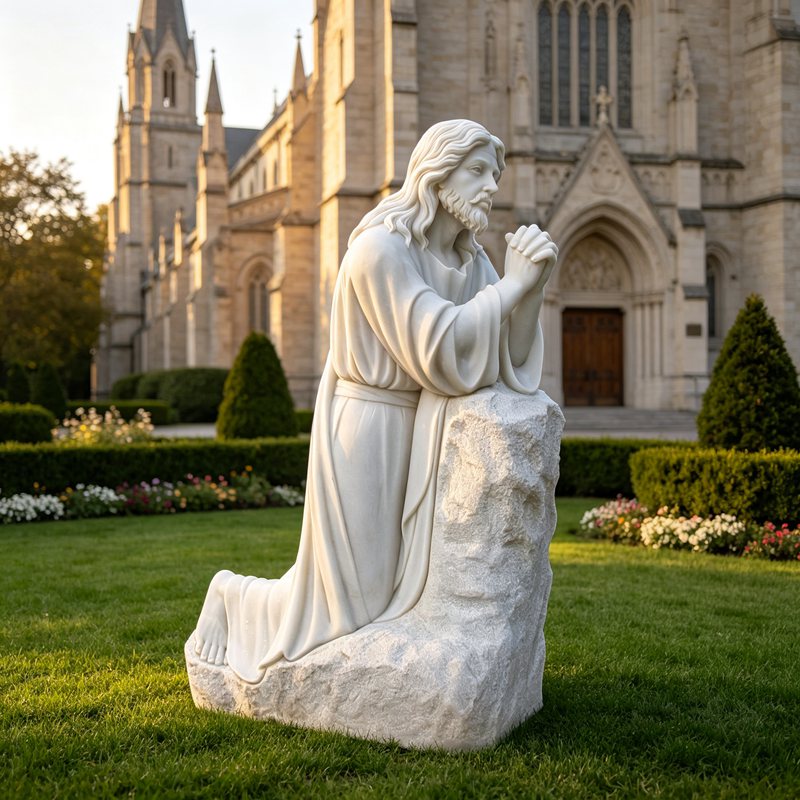
The image of Jesus kneeling in prayer is perhaps the most recognizable representation of Gethsemane.
Sculptors often portray Jesus kneeling on a rock or resting on one knee, with His hands joined in prayer or extended toward heaven. His head may be raised slightly, expressing an appeal to God, or lowered to convey sorrow and contemplation.
The facial expression is particularly important. A carefully carved face can communicate both human vulnerability and spiritual determination without requiring an elaborate composition.
A marble Jesus praying statue is a suitable choice for church gardens, prayer spaces, chapels, and religious memorial areas. Its relatively simple composition also makes it easier to incorporate into spaces where a large sculptural group may not be practical.
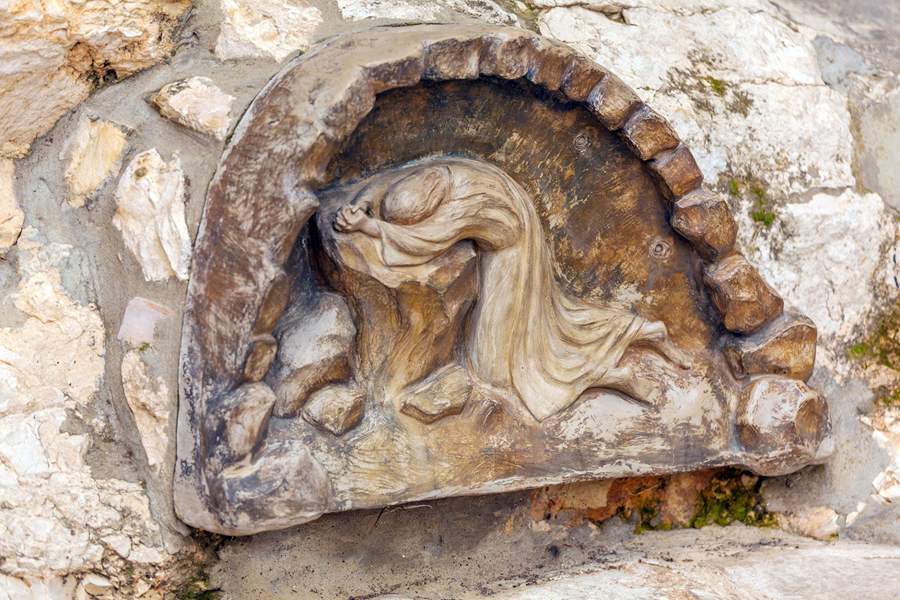
The Agony in the Garden – Jesus and the Angel
Another traditional representation is known as the Agony in the Garden.
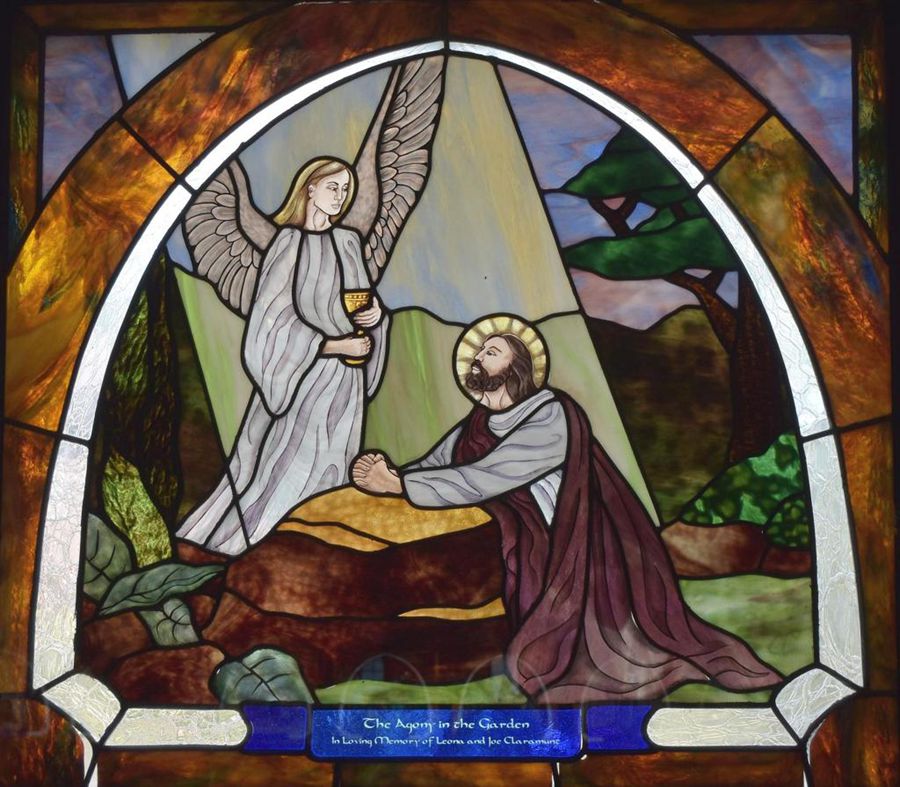
In this scene, an angel appears to comfort or strengthen Jesus during His prayer. The composition is inspired by the Gospel of Luke, which describes an angel appearing to strengthen Him.
Some artistic interpretations show the angel standing or kneeling beside Jesus. Others portray the angel holding a chalice, a symbol associated with the suffering Jesus was about to endure.
This two-figure composition creates a strong visual relationship between the human and spiritual dimensions of the story. It is particularly suitable for larger religious sculptures, church courtyards, and outdoor devotional settings.
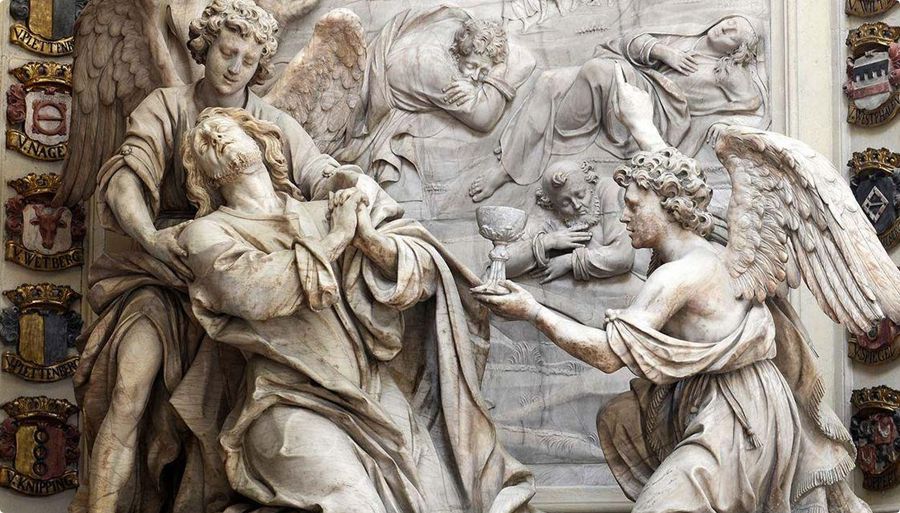
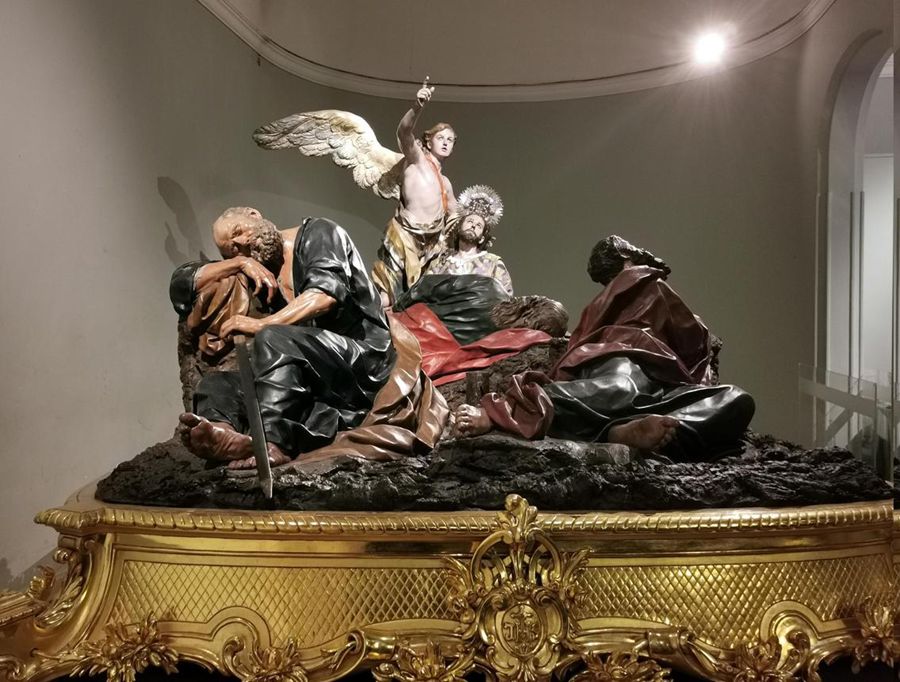
Jesus and the Three Sleeping Apostles
The three disciples who accompanied Jesus to Gethsemane—Peter, James, and John—also appear in many artistic representations of the event.
In these sculptural groups, Jesus is often positioned separately in prayer while the apostles rest nearby. Their sleeping postures create a contrast with His awareness of the approaching suffering.
This arrangement allows sculptors to tell more of the biblical story through a single composition. Instead of focusing only on Jesus, the artwork presents the different responses of the people who witnessed the event.
A group sculpture featuring Jesus and the three apostles generally requires more space and careful planning. The relative height, spacing, and orientation of each figure should be considered during the design stage.
3. Different Forms of Garden of Gethsemane Religious Art
Although statues are among the most recognizable forms of Gethsemane-inspired art, the subject has also appeared in many other artistic mediums.
Each medium offers a different way to communicate the story and can be incorporated into religious architecture and devotional spaces.
Marble Religious Sculptures and Stone Reliefs
Marble has a long history in religious sculpture because of its natural appearance, carving potential, and ability to preserve fine details.
A full-size marble statue of Jesus praying can serve as the focal point of a church garden or chapel. Smaller relief panels can also depict the Agony in the Garden on church walls, altars, and architectural surfaces.
Stone reliefs are particularly useful when a project has limited floor space but still needs a meaningful biblical scene.
The depth of the carving, the positioning of the figures, and the treatment of clothing folds all contribute to the final artistic effect.
Jesus in the Garden of Gethsemane Statue Replica
Bronze Religious Sculptures
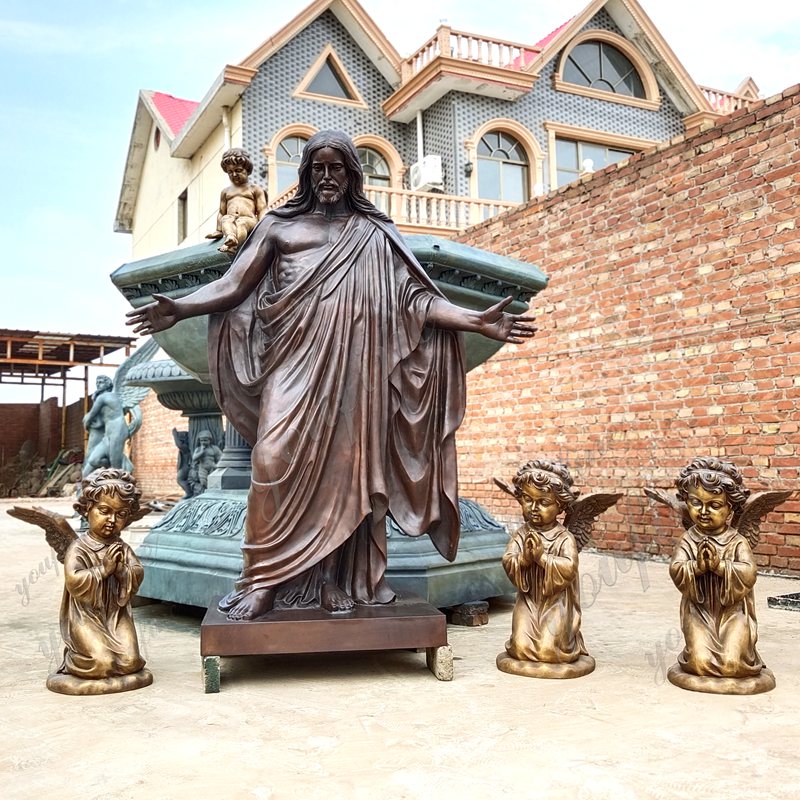
Bronze is another traditional material for religious and memorial sculpture.
Its casting process allows artists to create complex figures, expressive gestures, and compositions with multiple characters. Bronze statues can be particularly effective in outdoor religious settings where a sculptural group needs a strong visual presence.
Depending on the alloy and surface treatment, bronze can develop different finishes, from warm brown tones to darker patinas.
For larger outdoor installations, the design should also account for the sculpture’s weight, internal support structure, foundation, and anchoring system.
Religious Paintings, Mosaics, and Stained Glass
The Garden of Gethsemane has also inspired paintings, mosaics, and stained-glass windows.
Paintings can emphasize the dramatic atmosphere of Jesus’ prayer through light, shadow, and facial expression. Mosaics use colored stone or glass pieces to create detailed religious scenes, while stained glass transforms natural light into an important part of the visual experience.
These art forms are commonly incorporated into churches and chapels, where they complement statues and architectural decorations.
Combining sculptures with other forms of religious art can create a more complete visual narrative of the events leading to the crucifixion.
4. How Garden of Gethsemane Statues Are Used in Churches and Prayer Gardens
The placement of a religious statue influences how people experience the artwork. A well-planned location allows the sculpture to become part of the surrounding architecture and landscape rather than appearing as an isolated decorative object.
Church Gardens and Outdoor Prayer Spaces
A statue of Jesus praying in Gethsemane can serve as the central feature of an outdoor prayer garden.
The surrounding landscape may include olive trees, flowering plants, stone pathways, benches, and simple water features. These elements help create a peaceful environment for personal prayer and reflection.
When planning the installation, consider the viewing distance, sunlight direction, walking paths, and available space. The statue should be visible without obstructing the movement of visitors.
A marble Jesus statue can provide a classical appearance that works particularly well with traditional church architecture and natural stone landscaping.
 marble jesus statue feedback
Stations of the Cross and Religious Memorial Gardens
The events in Gethsemane are closely connected with the Passion of Christ and are sometimes included in expanded Stations of the Cross installations and other devotional gardens.
Although Gethsemane is not one of the standard fourteen Stations of the Cross, it is an important scene in the broader narrative of Christ’s Passion.
Churches can use a Gethsemane sculpture as an introductory scene in a larger devotional route, helping visitors reflect on the events preceding the crucifixion.
For this type of project, the scale and style of the sculpture should remain consistent with the other religious artworks along the route.

Church Entrances and Religious Courtyards
Religious sculptures can also be placed near church entrances, in courtyards, or beside designated prayer areas.
A single figure of Jesus may work well in a smaller courtyard, while a multi-figure composition can become a focal point in a larger open space.
The architectural style of the church should guide the choice of sculpture. Classical marble figures often complement stone facades, columns, and traditional landscaping, while bronze works can suit both historic and contemporary religious settings.
 jesus and religious angel statue feedback
5. What to Consider When Commissioning a Custom Garden of Gethsemane Statue
Commissioning a custom religious sculpture involves more than choosing a picture from a catalog. The biblical subject, artistic composition, dimensions, material, and installation conditions all need to be considered before production begins.
Statue Size and Installation Location
Start by identifying where the sculpture will be installed.
A single Jesus praying statue may be suitable for a small church garden or private prayer space. A composition featuring Jesus, an angel, and several apostles will require more room.
Before confirming the dimensions, consider:
-
Available installation area.
-
Viewing distance and viewing angles.
-
Height restrictions and surrounding architecture.
-
Foundation and ground conditions.
-
Access for transportation and installation equipment.
A simple site plan or a few photographs of the intended location can help the manufacturer recommend suitable dimensions.
Religious Details and Artistic Accuracy
Religious sculptures often carry meanings that depend on small visual details.
Before commissioning a Garden of Gethsemane sculpture, confirm the intended biblical scene and the figures that should appear in it.
For example, a design may focus on Jesus kneeling in prayer, or it may include an angel and the three apostles. These choices influence the composition, sculpture size, and production complexity.
Reference images, preliminary sketches, and design drawings can help ensure that the final artwork matches the church’s expectations.
Material Selection and Weather Resistance
For outdoor installations, material selection should account for local weather conditions.
In areas with heavy rainfall, freezing temperatures, or significant temperature changes, the suitability of the selected stone or metal should be evaluated carefully.
For marble sculptures, the manufacturer should be able to explain the characteristics of the proposed stone. For bronze sculptures, buyers should ask about the alloy, casting process, and protective surface treatment.
The base and anchoring system also deserve attention, especially for tall figures and multi-person compositions.
Customization, Production, and Shipping
A custom religious sculpture generally follows several stages:
-
Design discussion: Confirm the biblical subject, dimensions, material, and intended location.
-
Design confirmation: Review reference images, sketches, or clay models before production.
-
Sculpture production: The workshop carries out carving or casting according to the approved design.
-
Quality inspection: Check proportions, facial details, surface finish, and structural components.
-
Packaging and shipping: Prepare suitable protective packaging for international transportation.
-
Installation planning: Confirm the foundation, positioning, and anchoring requirements before the sculpture arrives.
For large religious projects, confirming these details early can help reduce design changes and installation difficulties later.
 marble Jesus carving process
6. Why Choose a Professional Manufacturer for Custom Religious Statues?
The quality of a religious sculpture depends on both artistic skill and manufacturing experience. For churches and organizations commissioning a custom Garden of Gethsemane statue, choosing a manufacturer with relevant experience can make the process more manageable.
A professional sculpture manufacturer should be able to provide:
Religious Sculpture Experience
Experience with Jesus statues, angels, apostles, saints, and other Christian figures helps the workshop understand traditional religious proportions, clothing details, and symbolic elements.
Natural Marble Selection
The manufacturer should explain the available marble varieties and help match the stone to the sculpture’s design and intended environment.
Custom Design Support
Custom projects may involve a single kneeling figure, a two-person composition, or a large sculptural group. The manufacturer should be able to discuss dimensions, proportions, and design adjustments before production.
Hand-Carving Craftsmanship
For marble sculptures, careful hand carving is essential for facial expressions, hands, clothing folds, and other details that influence the final appearance.
Project and Shipping Support
Large religious sculptures require appropriate packaging and transportation planning. Clear communication about production progress, inspection, shipping, and installation requirements helps buyers coordinate their projects.
At CNStatue, we offer a range of marble religious sculptures and custom stone carving solutions for churches, religious organizations, and architectural projects. Whether you are looking for a traditional Jesus statue or planning a larger religious sculpture installation, the right design and material can help create an artwork that reflects the meaning of the space.
 Jesus statue carving process
Create a Meaningful Religious Space with Custom Marble Sculptures
A Garden of Gethsemane statue is more than a decorative feature. It represents an important moment in Christian faith and provides a visual focus for prayer, reflection, and remembrance.
Whether you are planning a small church prayer garden or a larger religious landscape, selecting the right sculptural subject, material, and dimensions will help ensure that the artwork fits its setting.
YouFine provides marble religious sculptures and custom carving services for churches and religious projects. Contact our team to discuss your design ideas, reference images, and project requirements.
FAQs
1. What Does the Garden of Gethsemane Symbolize in Christianity?
The Garden of Gethsemane symbolizes prayer, sacrifice, obedience, and faith during times of suffering. It is where Jesus prayed before His arrest and accepted the will of the Father, making it an important setting in the story of the Passion.
2. What Is the Meaning of Jesus Praying in the Garden of Gethsemane Statues?
These statues represent Jesus’ emotional and spiritual struggle before His crucifixion. His kneeling posture, joined hands, and facial expression often communicate sorrow, devotion, and submission to God’s will.
3. What Figures Are Commonly Included in Garden of Gethsemane Sculptures?
Common figures include Jesus, an angel, and the three apostles Peter, James, and John. Some compositions focus only on Jesus in prayer, while larger sculptural groups recreate more of the biblical scene.
4. What Materials Are Best for Outdoor Garden of Gethsemane Statues?
Marble and bronze are both established materials for outdoor religious sculptures. Marble offers a natural stone appearance and traditional character, while bronze allows complex sculptural compositions and different patina finishes. The best choice depends on local climate, design, and maintenance requirements.
5. Can Garden of Gethsemane Statues Be Customized for Churches?
Yes. Custom sculptures can be designed according to the church’s preferred biblical scene, dimensions, material, and installation location. Buyers can provide reference photographs, sketches, or design ideas to help the manufacturer develop a suitable composition.
6. Where Should a Garden of Gethsemane Statue Be Placed in a Prayer Garden?
A Jesus praying statue can be placed at the center of a quiet garden, along a devotional pathway, or near a designated prayer area. The surrounding landscape should provide enough space for visitors to view the sculpture and spend time in reflection.