



An elephant statue is often chosen for more than its impressive form. It can express wisdom, strength, protection, family unity, and good fortune while bringing a memorable artistic presence to its surroundings.
The meaning people see in an elephant sculpture is often influenced by its cultural background, trunk position, pose, grouping, and placement. Once you know the feeling you want the sculpture to create, the material helps bring that idea into the space.
If you imagine an elephant that feels lifelike and full of movement, bronze gives the artist considerable freedom to shape the body, trunk, ears, and expression. If you are drawn to the natural texture of stone or want a formal pair for an entrance, marble may feel more at home in the setting.
Neither material is universally better. The right choice is the one that brings together your preferred artistic style, surrounding architecture, installation environment, and practical project requirements.
What Does an Elephant Statue Symbolize?
Elephants are admired for the rare combination of physical power and calm intelligence they convey. This is why elephant sculptures can feel commanding without appearing aggressive.
Common meanings associated with elephant statues include:
-
Wisdom and memory: Elephants are widely admired for their intelligence, awareness, and long memory.
-
Strength and resilience: Their scale and physical presence suggest endurance and the ability to overcome difficulties.
-
Protection and stability: A large elephant near an entrance can create a reassuring sense of security.
-
Family unity: Elephant families are often associated with care, loyalty, cooperation, and protection of younger family members.
-
Good fortune and prosperity: In several Asian traditions, elephants are considered auspicious animals connected with success, abundance, and royalty.
-
Leadership and dignity: Their calm presence makes elephant sculptures suitable for institutions, public spaces, and landmark projects.
These meanings are not identical in every culture. Singapore’s National Heritage Board describes elephants in Asian religion, art, and culture as symbols of strength, royalty, luck, and wisdom. In South Africa’s national coat of arms, elephant tusks represent wisdom, strength, moderation, and eternity.
Together, these interpretations help explain why an elephant can represent both great power and thoughtful restraint.
Sources: National Heritage Board of Singapore and South African Government.
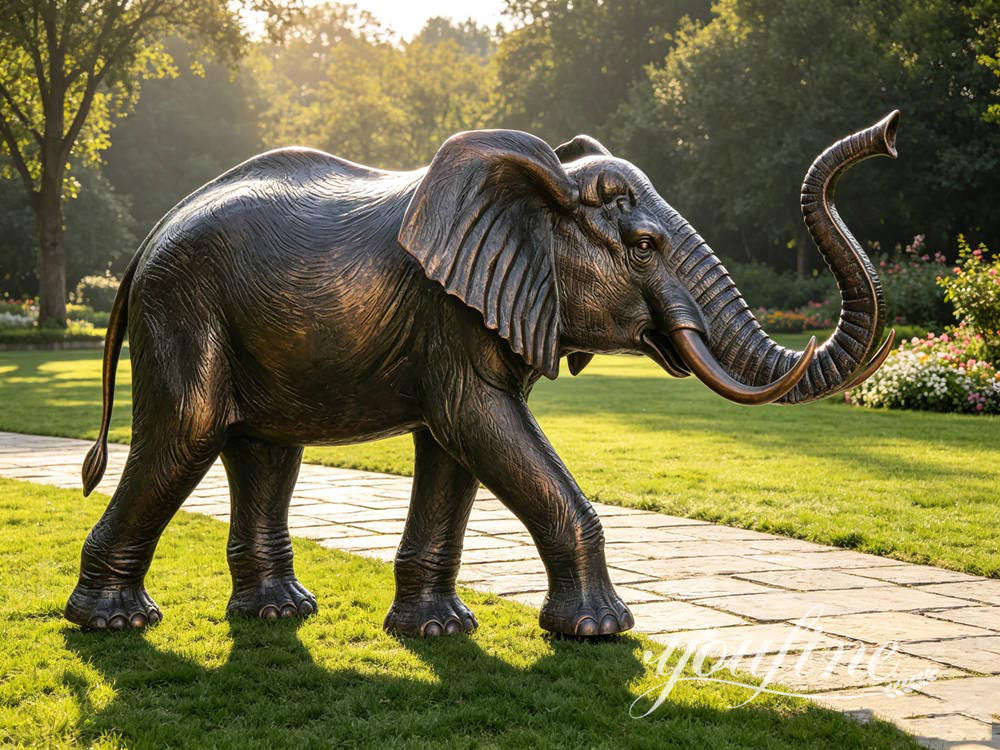 bronze elephant sculpture
 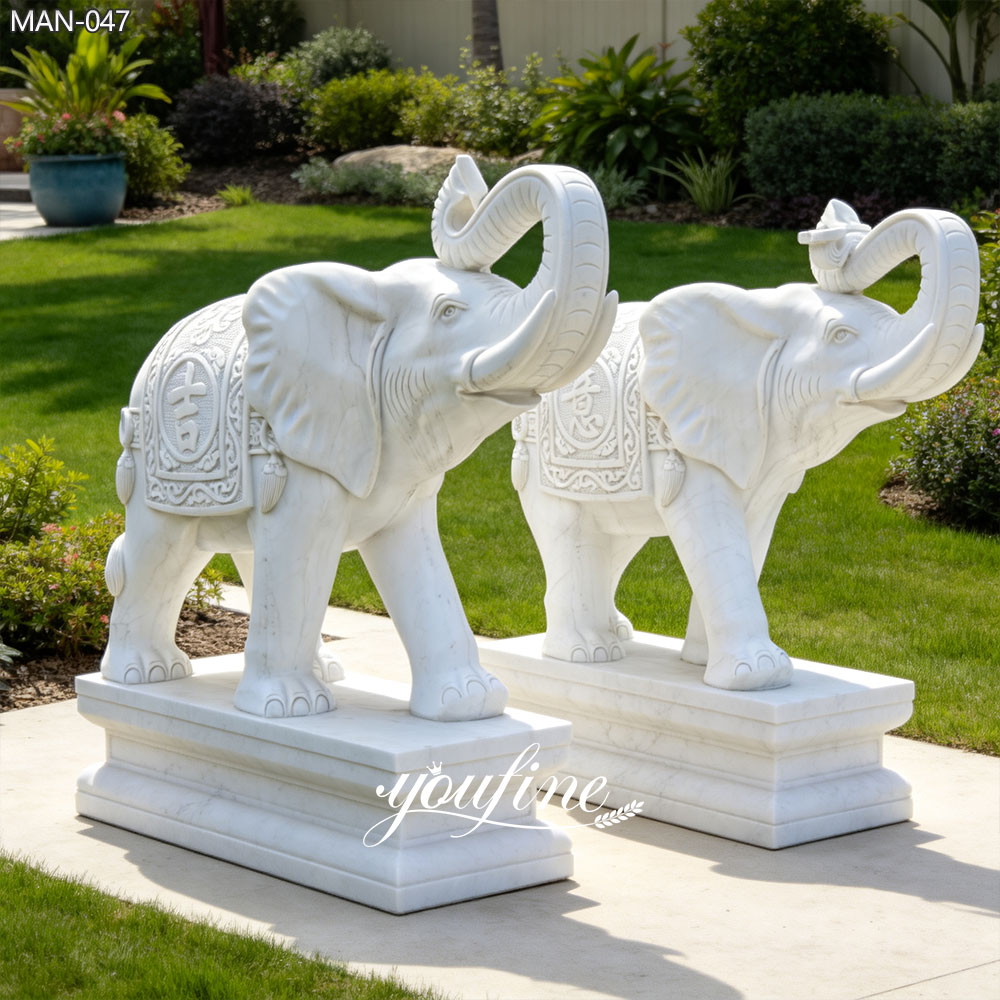 marble elephant statue
What Do Different Elephant Poses Mean?
When choosing an elephant statue, the pose can be just as important as the material. A raised trunk creates a very different feeling from a naturally lowered trunk, while a family group tells a different story from a single elephant.
The following interpretations are useful as cultural and artistic references. They should not be understood as guarantees of wealth, health, or success.
| Elephant pose or design | Common interpretation | Suitable settings |
|---|---|---|
| Trunk raised | Welcome, celebration, confidence, and positive energy | Entrances, hotels, gardens, and commercial spaces |
| Trunk lowered | Stability, patience, longevity, and grounded strength | Estates, quiet gardens, and natural landscapes |
| Walking elephant | Progress, determination, and forward movement | Parks, zoos, campuses, and public landscapes |
| Pair of elephants | Balance, protection, and a formal sense of arrival | Gates, driveways, and building entrances |
| Elephant family | Family unity, care, cooperation, and protection | Resorts, parks, schools, and family‑oriented spaces |
| Elephant fountain | Water, movement, vitality, and abundance | Pools, courtyards, hotels, and landscape water features |
Elephant Statue With Its Trunk Up
A raised trunk is often associated with welcome, celebration, confidence, and good fortune. The upward movement also gives the sculpture a more energetic and expressive silhouette.
This pose works particularly well at entrances and in places intended to feel positive and inviting. A pair of marble elephant statues with raised trunks can bring symmetry and ceremony to a gate or driveway. In bronze, the same idea can be expressed through more movement in the trunk, ears, and body.
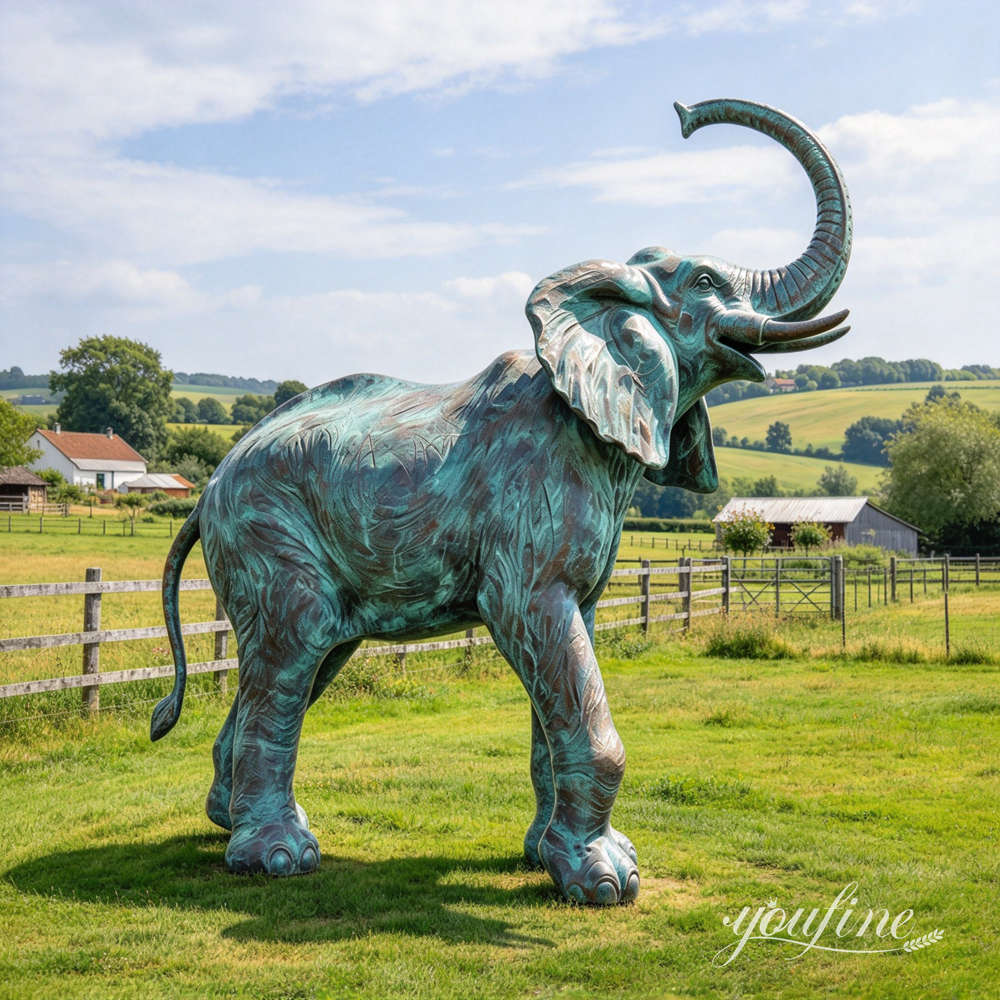 bronze elephant statue with trunk up
Elephant Statue With Its Trunk Down
A lowered trunk should not automatically be considered unlucky. It can suggest patience, calmness, stability, longevity, and a close connection with the ground.
Many clients prefer this pose because it feels natural and composed. It can be especially appropriate for a quiet garden, estate entrance, park, or landscape where the elephant should appear realistic rather than highly decorative.
A large bronze elephant with a naturally lowered trunk, for example, creates a grounded silhouette while still having enough scale to become a strong visual landmark.
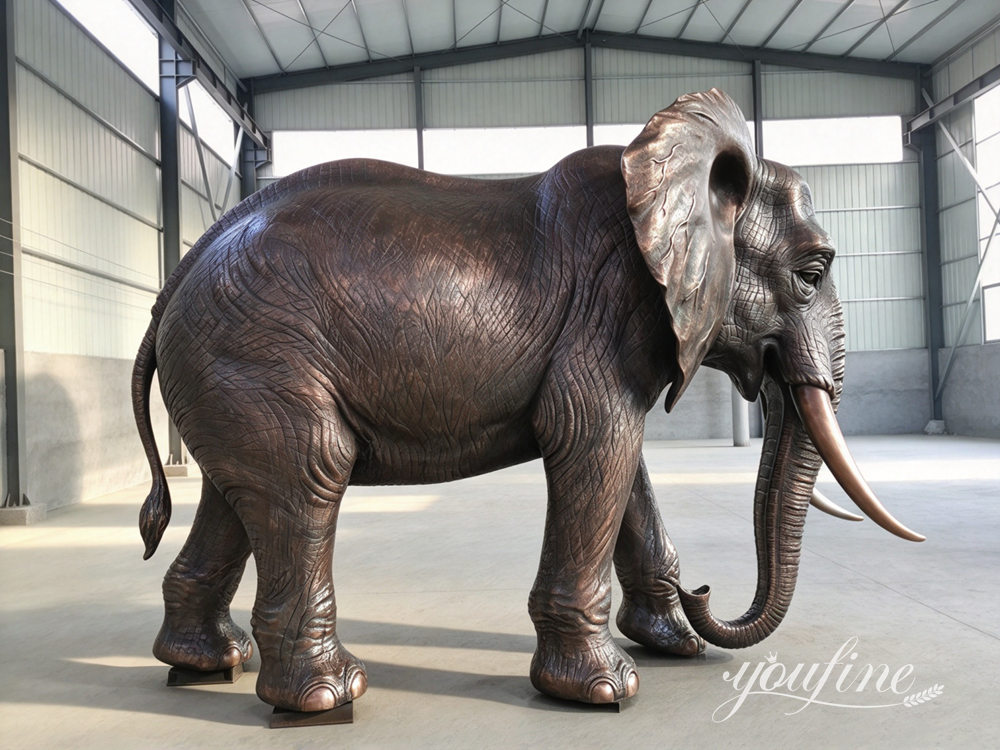 bronze elephant statue with trunk down
Elephant Pairs and Family Groups
A pair of elephants can frame an entrance and create a balanced sense of arrival. This arrangement is often chosen for gates, driveways, hotels, and formal gardens.
An elephant family creates a warmer and more emotional story. Adult elephants and calves naturally suggest care, protection, connection, and continuity between generations.
For parks, resorts, wildlife attractions, schools, and family-oriented spaces, a bronze elephant family statue can communicate these ideas more clearly than a single elephant.
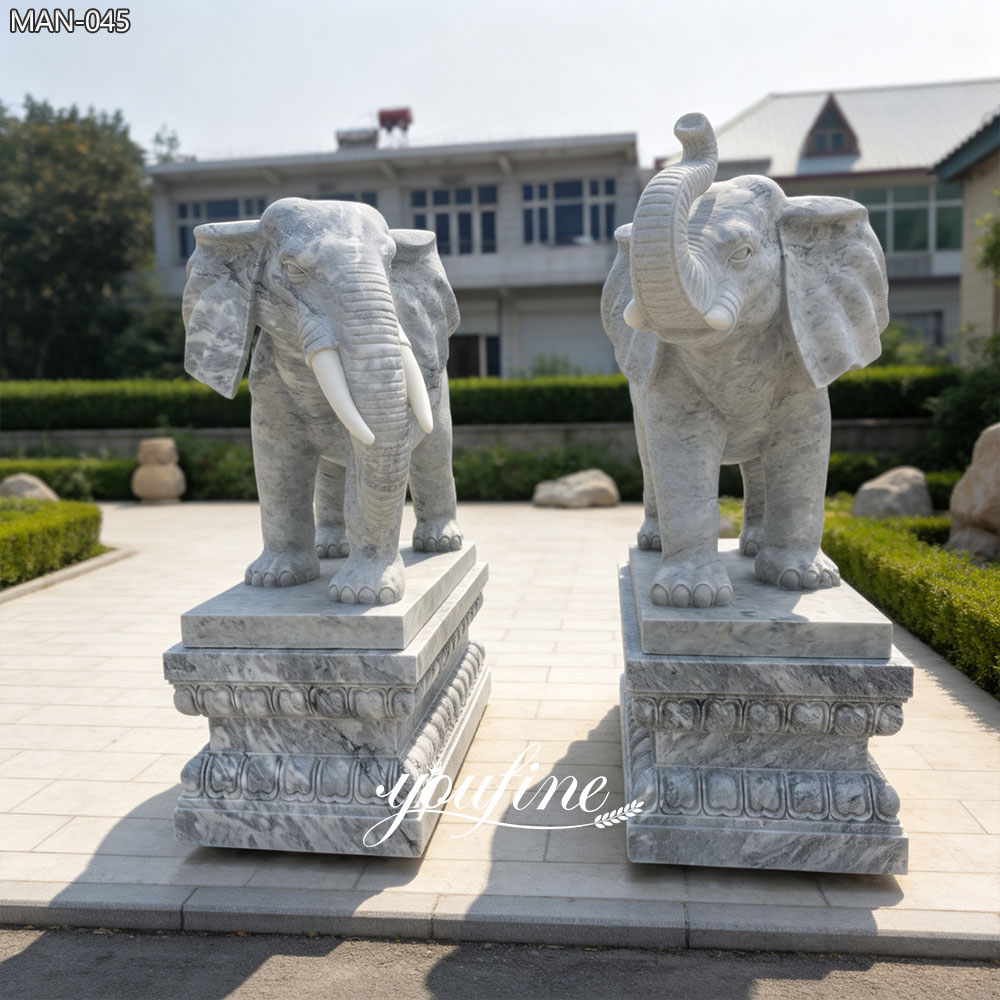 marble pair of elephant statue
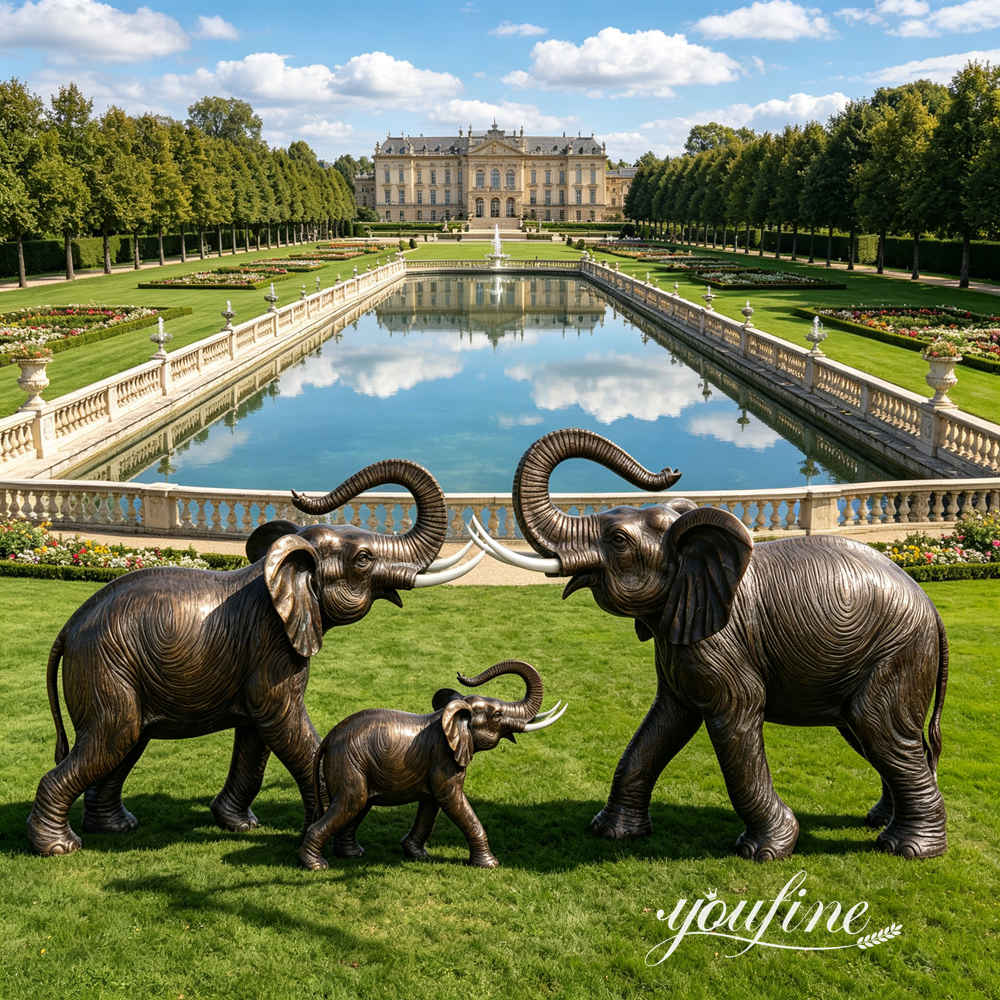 bronze elephant family sculptures
Does the Material Affect the Meaning?
Bronze and marble can both express wisdom, strength, protection, and family unity. The material does not replace these meanings; it gives them a different visual character.
Bronze often makes an elephant feel animated and lifelike. It allows the sculptor to explore walking poses, extended trunks, flared ears, detailed skin textures, and multi-elephant compositions.
Marble creates a different experience. Its natural color, veining, weight, and carved surface can make an elephant feel more formal, architectural, and timeless. It is especially effective when the sculpture needs to relate to stone steps, columns, fountains, walls, or a symmetrical entrance.
The most useful question is therefore not simply, “Which material is better?” It is:
Which material will create the atmosphere you want in your particular space?
Bronze vs. Marble Elephant Statues
| Consideration | Marble elephant statue | Bronze elephant statue |
|---|---|---|
| Overall character | Natural, formal, architectural, and refined | Lifelike, expressive, substantial, and dynamic |
| Design strengths | Paired entrances, carved bases, ornamental patterns, and symmetrical compositions | Moving poses, realistic anatomy, family groups, fountains, and complex custom forms |
| Surface appearance | Natural white, beige, pink, grey, or veined stone | Brown, dark bronze, green, black, gold, or custom patina |
| Detail | Well suited to carved ornaments, bases, blankets, and architectural decoration | Well suited to skin folds, muscles, facial expressions, and movement |
| Typical settings | Estates, hotels, courtyards, gardens, and formal entrances | Parks, zoos, resorts, plazas, campuses, and public landscapes |
| Construction | Carved from natural stone and generally substantial in weight | Commonly cast in sections, with internal support and anchoring added when required |
| Outdoor care | Requires suitable stone selection, drainage, cleaning, and climate‑aware maintenance | Requires inspection, drainage, cleaning, and periodic care of the protective surface |
| Customization | Stone color, size, base, carving patterns, and paired orientation | Size, pose, anatomy, patina, internal structure, fountain system, and anchoring |
Both materials can remain outdoors for many years when the sculpture is properly designed, installed, and maintained. Neither material should be treated as completely maintenance-free.
The Canadian Conservation Institute notes that outdoor stone and bronze can both be affected by water, pollutants, salts, and local climate. Appropriate siting, drainage, inspection, and maintenance therefore matter regardless of the material you choose.
Source: Canadian Conservation Institute guidance for outdoor objects.
When Is Bronze the Right Choice?
Bronze may suit your project if you want the elephant to feel as though it could move through the landscape.
It is particularly useful when your design includes:
-
Realistic anatomy and expressive movement
-
A walking, reaching, seated, or highly dynamic pose
-
Detailed skin, ears, tusks, eyes, or facial expression
-
An elephant family or multi-figure composition
-
A trunk that also serves as a fountain outlet
-
A specific brown, black, green, gold, or antique-style patina
-
A large sculpture requiring sectional production and engineered anchoring
A bronze elephant normally begins with a clay model. At this stage, the body proportions, pose, trunk direction, ears, tusks, and surface details can be reviewed before casting begins.
For a client, this is an important opportunity to see how the sculpture is developing and request adjustments before the design moves into metal. The approved model then proceeds through mold making, wax preparation, lost-wax casting, welding, surface chasing, and patination.
This process gives bronze considerable freedom for realistic and dynamic elephant designs. You can view different poses in our bronze elephant statue collection or learn more about how YouFine makes bronze sculptures.
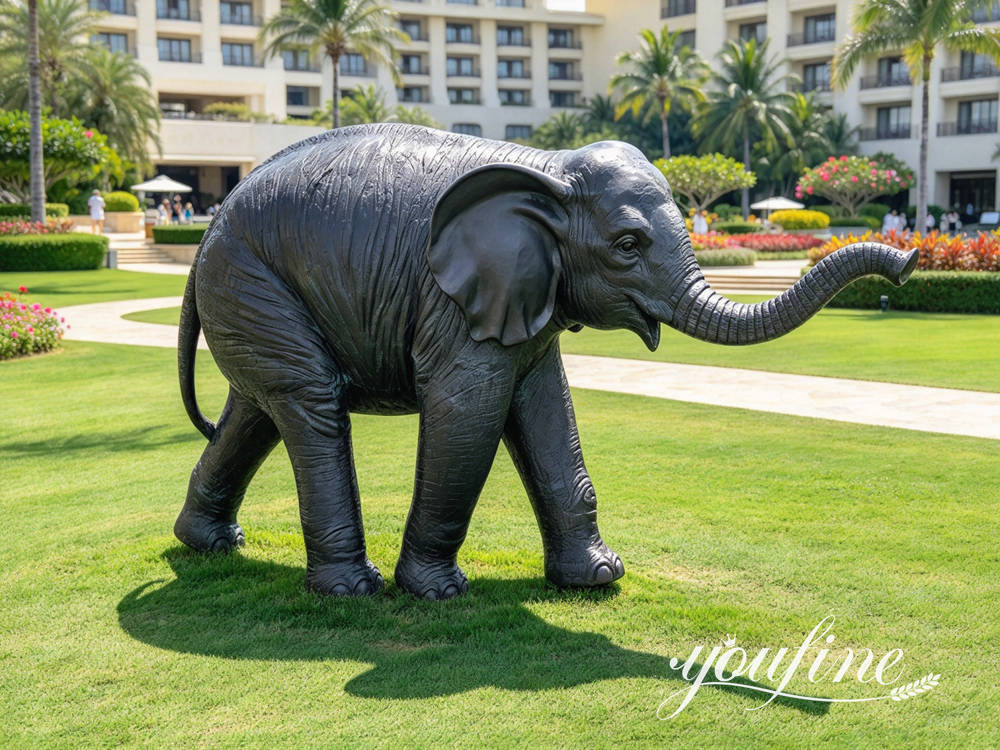 bronze elephant statue
When Is Marble the Right Choice?
Marble may be the more natural choice when the sculpture needs to become part of the architecture rather than appear separate from it.
Clients often choose marble when they prefer:
-
The natural color, texture, and variation of genuine stone
-
A matched pair placed on either side of an entrance
-
A formal, classical, or architectural appearance
-
Carved bases, decorative blankets, floral patterns, or symbolic motifs
-
A sculpture that coordinates with marble columns, fountains, balustrades, or façades
-
A substantial stone presence for an estate, hotel, courtyard, or landscaped entrance
Every block of natural stone has its own color and veining. This means no two marble elephants are perfectly identical, even when they are carved as a pair. For many clients, this natural variation is part of the appeal rather than a defect.
Stone selection is therefore an important part of the design process. When two elephants will stand opposite each other, the material, proportions, base design, trunk direction, and decorative details should be reviewed together.
Explore our marble elephant statue collection or see how marble sculptures are selected, carved, detailed, and finished.
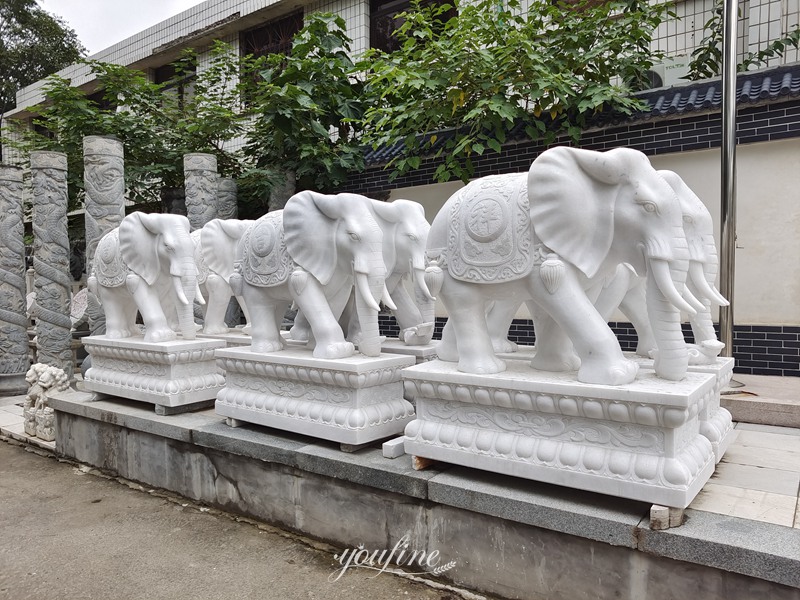
How to Choose an Elephant Statue for Your Space
You do not need to make the decision based on material alone. Start with the space and the feeling you want the finished sculpture to create.
1. Where Will the Sculpture Be Installed?
An estate entrance, hotel lobby, zoo, public park, private garden, and pool landscape all call for different scales and visual effects.
2. Should It Feel Formal or Natural?
A symmetrical marble pair can reinforce the architecture of an entrance. A realistic bronze elephant can create a stronger sense of wildlife and movement within a landscape.
3. How Will People Approach and View It?
Consider whether visitors will see the sculpture from the front, from a vehicle, along a pathway, or from several directions. The trunk position, pose, spacing, and level of detail should respond to these viewing angles.
4. Does the Design Include Complex Movement?
Bronze generally offers more flexibility for extended trunks, large ears, open poses, family compositions, and water features. Marble can achieve beautiful detail, but projecting parts must be designed with the strength and natural structure of the stone in mind.
5. What Materials Already Appear in the Architecture?
If the site already includes marble steps, columns, fountains, or balustrades, a marble elephant may feel naturally integrated. In a park, zoo, or wildlife landscape, the color and realism of bronze may create a more convincing relationship with the surroundings.
6. What Are the Installation Conditions?
Final dimensions, weight, access, foundation, lifting equipment, anchoring, drainage, climate, and maintenance access should be considered before production begins.
These practical details do not take away from the artistic decision. They help ensure that the sculpture looks appropriate and performs well after installation.
How YouFine Helps You Find the Right Solution
YouFine has focused on sculpture production since 1983. Because our teams work with both lost-wax bronze casting and hand-carved natural stone, we can approach a project by first considering what the client wants to achieve.
If you want an elephant with lifelike movement, detailed anatomy, or a complex composition, our bronze team can develop the pose through clay modeling and casting. If you prefer natural stone, formal symmetry, or a pair that complements an architectural entrance, our marble team can help select the stone, base, carving details, and orientation.
We can review:
-
The installation environment
-
Preferred size and viewing distance
-
Single, paired, or family composition
-
Trunk direction and body pose
-
Bronze patina or natural stone color
-
Base, foundation, and anchoring requirements
-
Packing, shipping, and installation planning
The goal is not simply to sell a bronze or marble elephant. It is to help you choose a sculpture that feels appropriate for the space and remains visually meaningful after installation.
Learn more about YouFine’s sculpture manufacturing process and our factory history since 1983.
Frequently Asked Questions
Is an elephant statue with its trunk down unlucky?
No. A lowered trunk can represent calmness, patience, stability, longevity, and grounded strength. Cultural interpretations vary, so the visual character of the pose and its relationship with the setting are equally important.
Should an elephant statue face inward or outward?
There is no universal rule. An outward-facing elephant can appear to guard an entrance, while an inward-facing elephant may feel more welcoming. For a large sculpture, the architecture, traffic flow, viewing direction, and site composition should also guide the decision.
Is bronze or marble better for outdoor use?
Both can be used outdoors. Bronze requires suitable drainage, surface protection, inspection, and periodic cleaning. Marble requires suitable stone selection, good drainage, careful cleaning, and consideration of moisture, salts, pollution, and freeze-thaw conditions.
Should I choose one elephant or a pair?
A pair is especially effective for symmetrical gates, driveways, and building entrances. A single elephant works well as a garden focal point or independent artwork. A family group is more suitable when you want the sculpture to express care, connection, and community.
Can the pose and material be customized?
Yes. Bronze elephants can be customized in size, pose, anatomy, patina, internal structure, and anchoring. Marble elephants can be customized in size, stone color, decorative carving, base design, and paired orientation. The available options will depend on the design and installation environment.
Find the Right Elephant Sculpture for Your Project
The right elephant sculpture should connect its meaning, material, and surroundings.
Bronze is an excellent choice when you want realistic movement, expressive anatomy, a complex composition, or a custom patina. Marble is particularly suitable when you value natural stone, formal symmetry, architectural presence, and hand-carved decoration.
If you are unsure which direction is right for your project, send us your site photographs, preferred dimensions, reference images, destination, and intended placement. The YouFine team can help you compare suitable materials, poses, finishes, structural options, and installation requirements.