



From my experience working in the sculpture industry, I have learned that Aristotle statues are not only decorative artworks. For many buyers, they represent knowledge, logic, education, science, and the long tradition of classical thinking. I have seen customers choose philosopher busts for private studies, libraries, schools, universities, and cultural spaces because these sculptures bring a quiet intellectual atmosphere to the room.
Aristotle is especially popular because he was more than a philosopher. He was also a scientist, teacher, writer, and one of the great “encyclopedic” minds of ancient Greece. His ideas influenced logic, ethics, biology, politics, literature, and many other fields. That is why an Aristotle sculpture feels suitable in both academic and personal spaces.
In this article, I will introduce Aristotle briefly, then walk through six famous Aristotle statues and reliefs around the world. I will also share practical advice on how to choose an Aristotle statue for different spaces, based on what I often consider when helping buyers think about sculpture style, size, material, and placement.
 famous Aristotle statue
Who Was Aristotle?
Aristotle was an ancient Greek philosopher and scientist who lived from 384 BC to 322 BC. He was a student of Plato and later became the teacher of Alexander the Great. Together with Socrates and Plato, he is considered one of the most important figures in Western philosophy.
What makes Aristotle special is the wide range of his thinking. He wrote about logic, metaphysics, ethics, politics, rhetoric, poetry, biology, zoology, physics, and more. In simple words, he tried to understand how the world works, how people should live, and how knowledge should be organized.
This is why many people call him an “encyclopedic” scholar. He did not focus on only one subject. He helped shape many fields and influenced education for centuries.
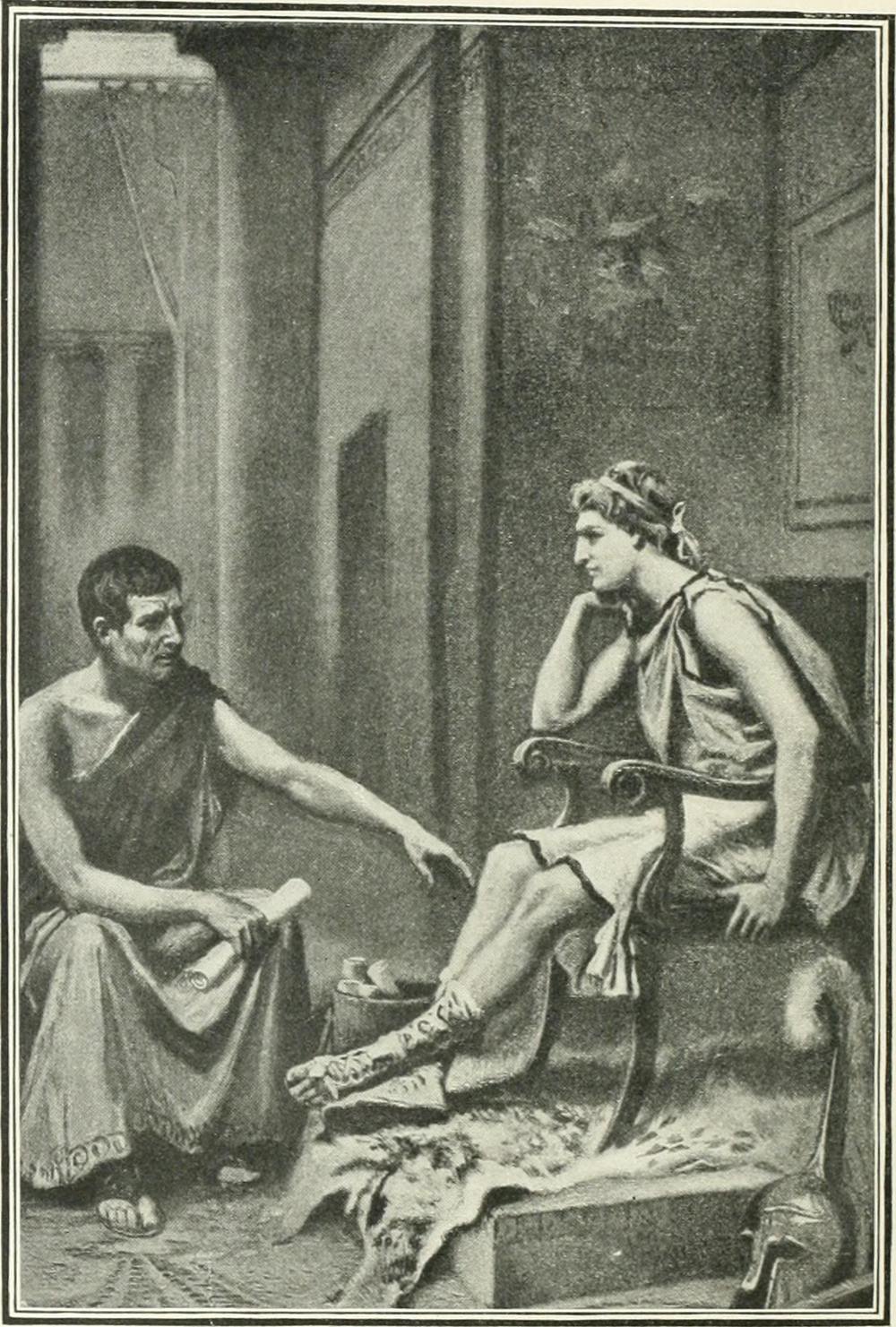 Aristotle tutoring Alexander
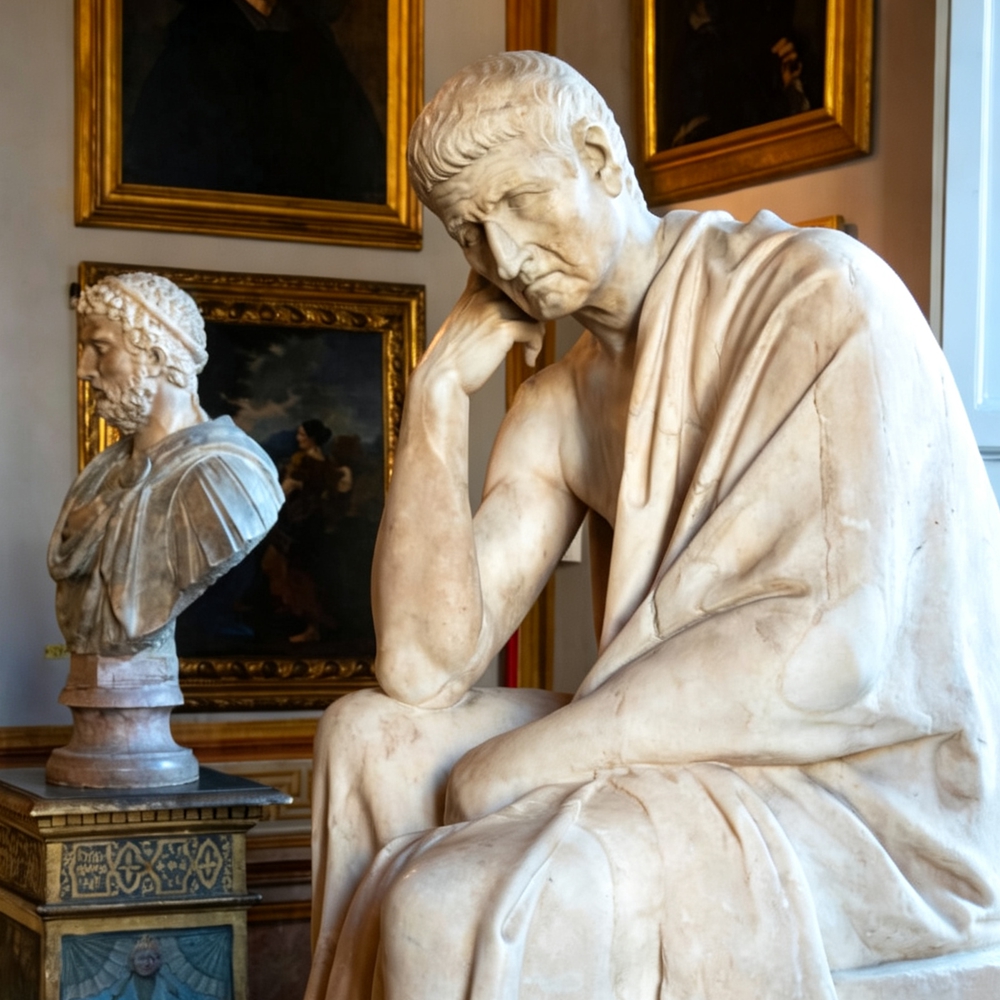
1. Seated Aristotle Statue in Galleria Spada, Rome, Italy
One of the well-known Aristotle statues can be found in the Galleria Spada, located in the Palazzo Spada in Rome, Italy. This statue shows Aristotle seated in a thinking pose, which is a very suitable image for a philosopher.
A seated pose gives the sculpture a calm and reflective feeling. Instead of showing movement or power, it shows concentration. This type of pose is especially good for indoor cultural spaces, libraries, and formal halls because it invites viewers to slow down and think.
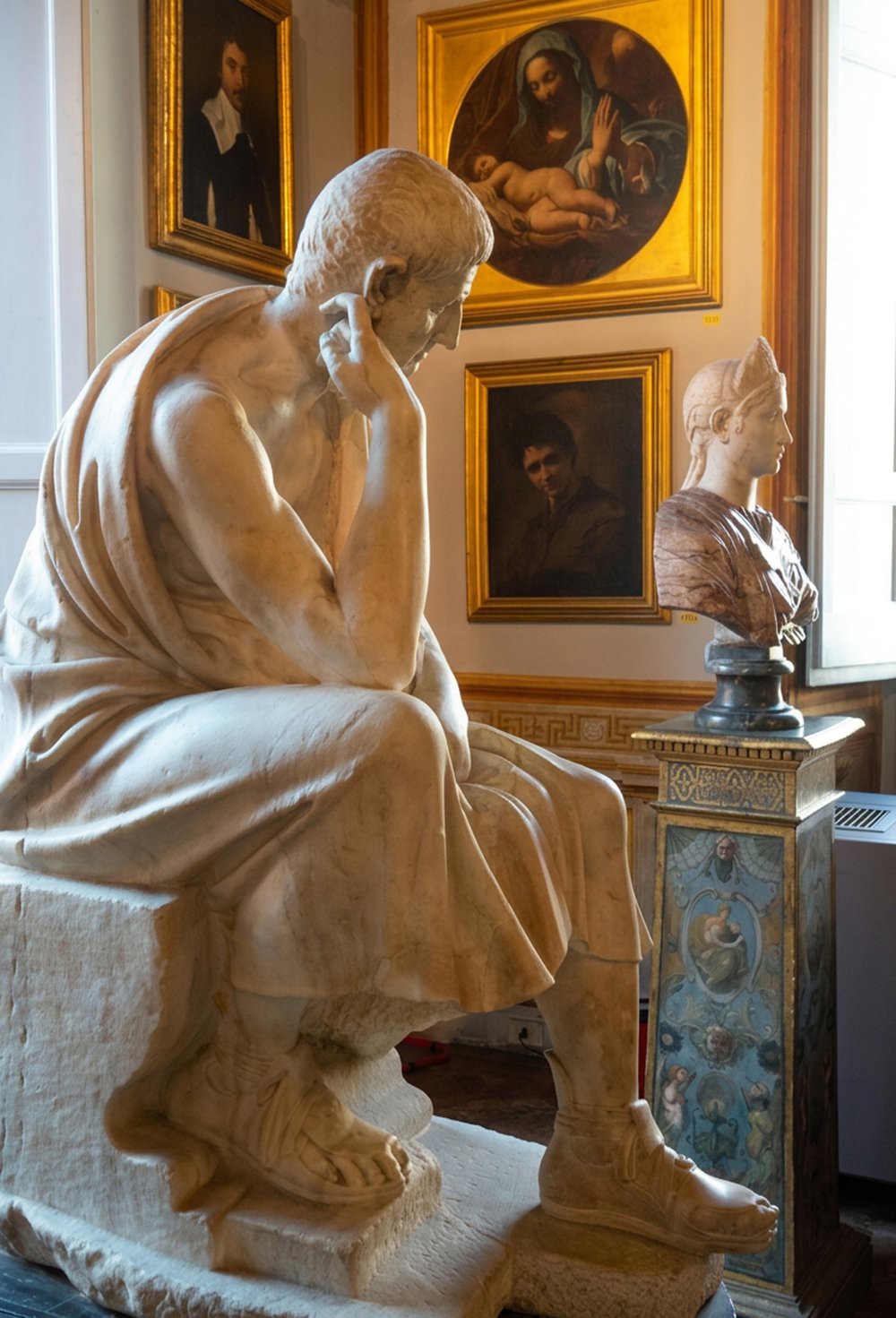 Italy Rome Galleria Spada Gallery Palazzo statue of Greek philosopher, Aristotle in a sitting thinking pose
2. Relief of Aristotle and Plato by Luca della Robbia, Florence Cathedral, 1437–1439
Another important artwork is the relief of Aristotle and Plato by Luca della Robbia, created between 1437 and 1439 for Florence Cathedral. A relief is a sculpture where the figures are carved or modeled on a flat background instead of standing freely in space.
This artwork is different from a freestanding statue. It presents Aristotle together with Plato, which highlights the connection between teacher, student, and the history of philosophy. Plato was Aristotle’s teacher, but Aristotle later developed many ideas in his own direction.
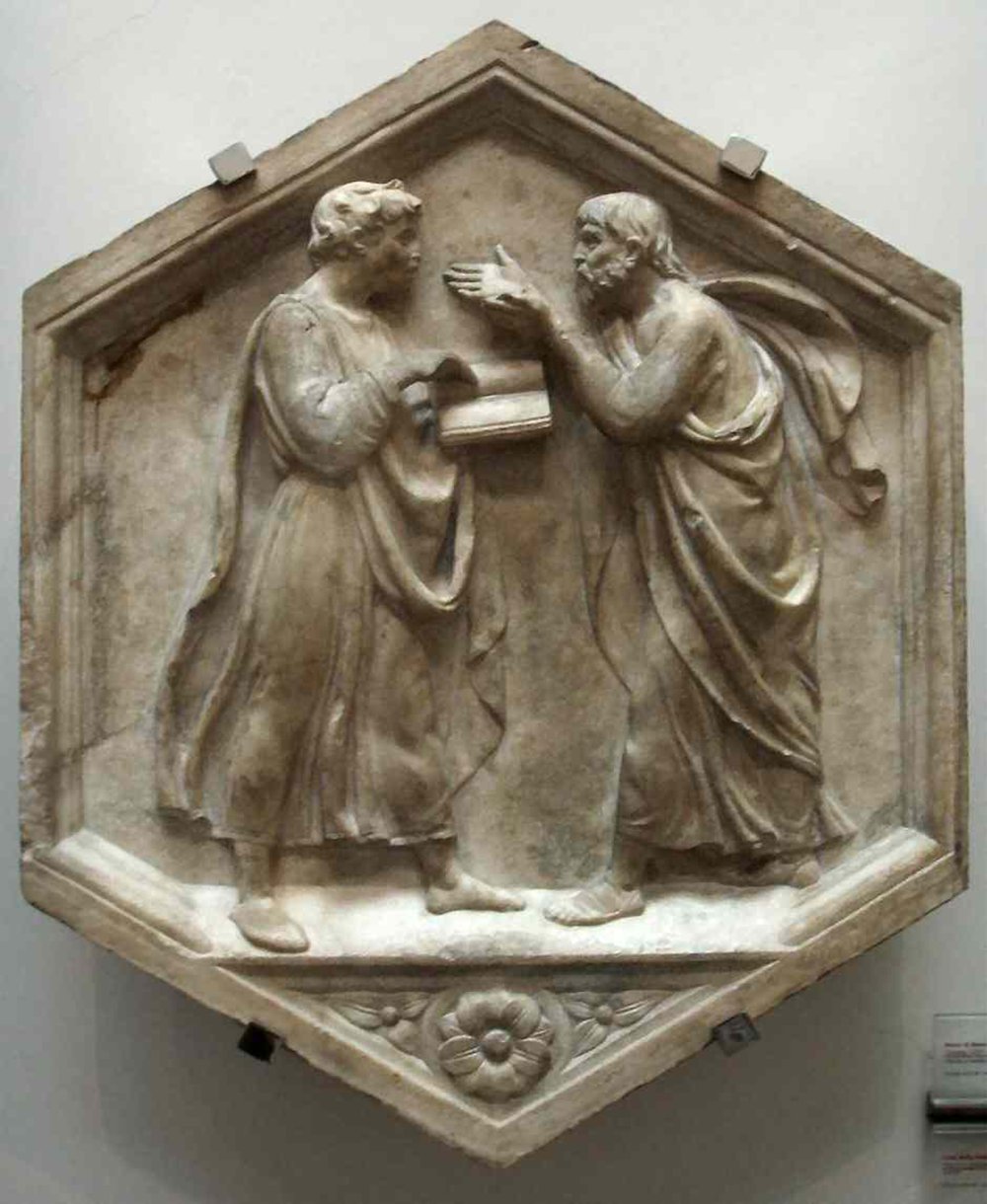 Relief of Aristotle and Plato by Luca della Robbia, Florence Cathedral, 1437–1439
3. Roman Copy After a Bronze Original by Lysippos, Louvre Museum
The Louvre Museum holds a Roman copy from the 1st or 2nd century, based on an original bronze attributed to Lysippos. Lysippos was one of the great sculptors of ancient Greece, known for his refined treatment of the human figure.
This type of museum piece is important because many original Greek bronzes did not survive. Roman copies preserved the appearance of many ancient works. When buyers today request a classical Aristotle bust or statue, museum examples like this often become useful references for facial structure, hair, beard, and expression.
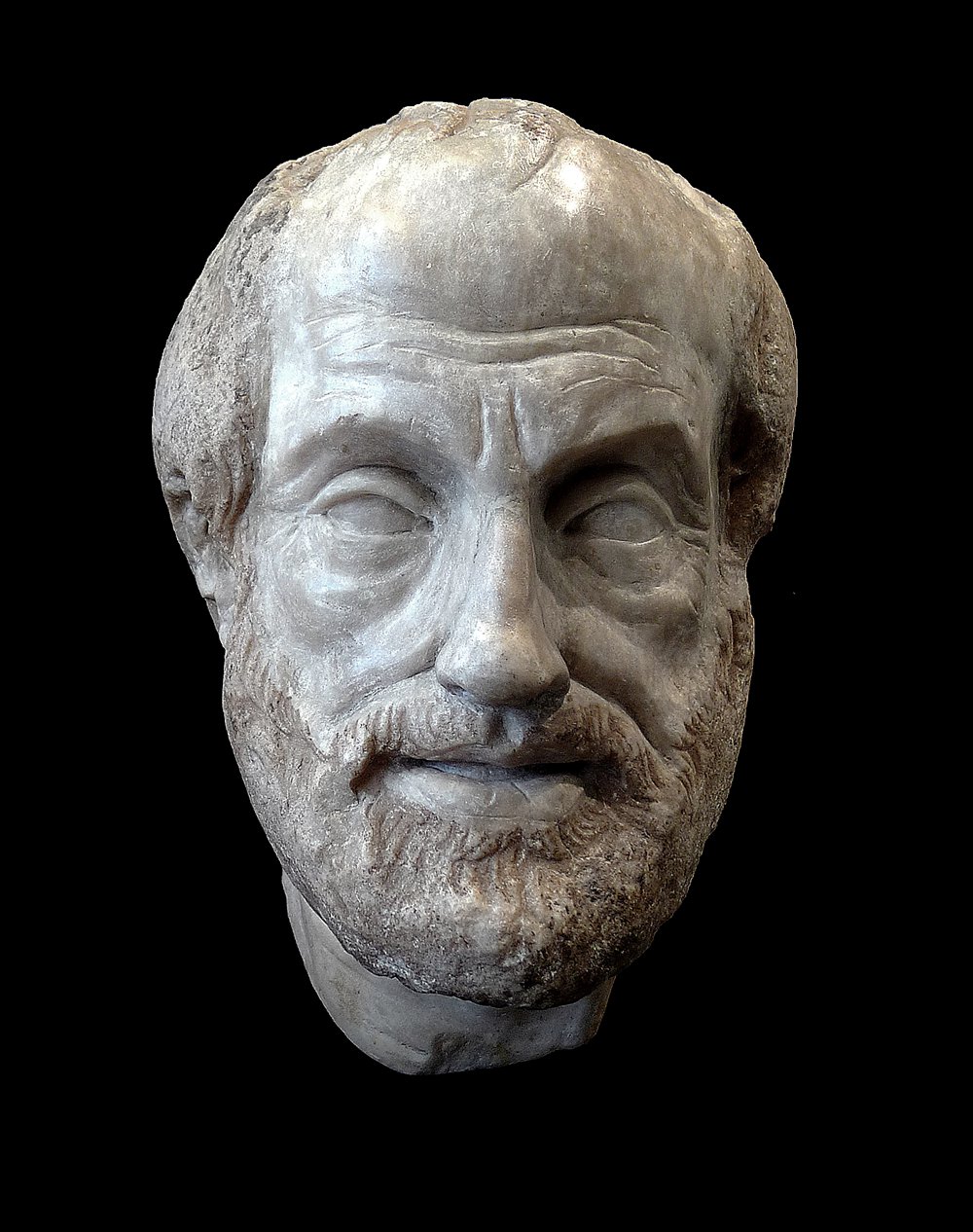 Roman copy of 1st or 2nd century from original bronze by Lysippos. Louvre Museum
4. Roman Copy of Greek Original, Palermo Regional Archaeology Museum
Another famous Aristotle sculpture is a Roman copy from 117–138 AD of a Greek original, now in the Palermo Regional Archaeology Museum. Like the Louvre example, this piece shows how Roman copies helped preserve Greek philosophical portraiture.
The Palermo Aristotle is valuable because it gives another historical reference for how Aristotle was represented in classical art. For people who want an accurate ancient style, it is useful to compare more than one museum source.
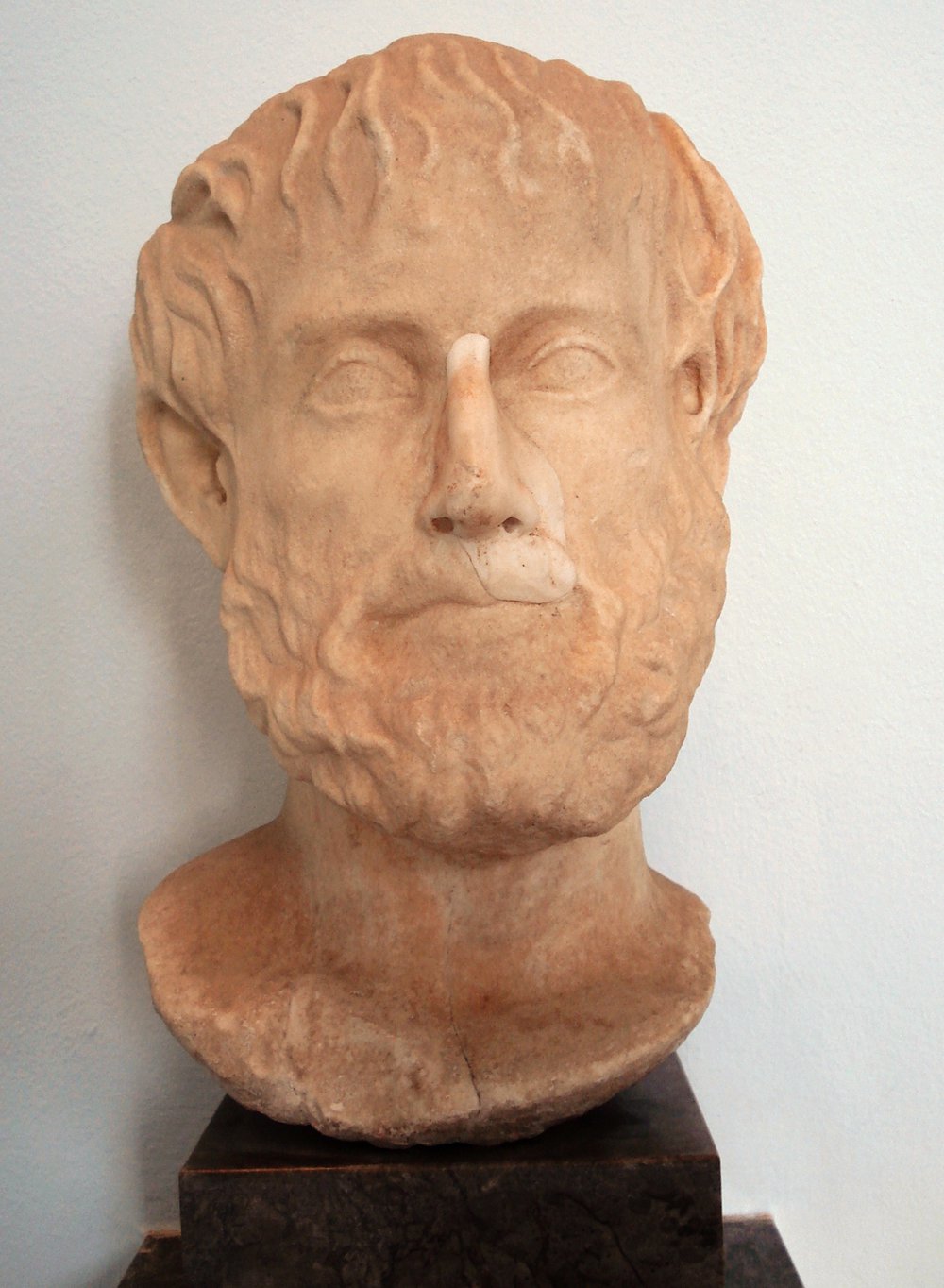 Roman copy of 117–138 AD of Greek original. Palermo Regional Archeology Museum
5. Stone Statue in a Niche, Gladstone’s Library, Hawarden, Wales, 1899
The stone statue of Aristotle in a niche at Gladstone’s Library in Hawarden, Wales, dates to 1899. This example is especially interesting for architectural placement.
A niche is a recessed space in a wall designed to hold a statue. Statues placed in niches often look formal, stable, and integrated with the building. This style is very suitable for libraries, schools, churches, historic buildings, and academic interiors.
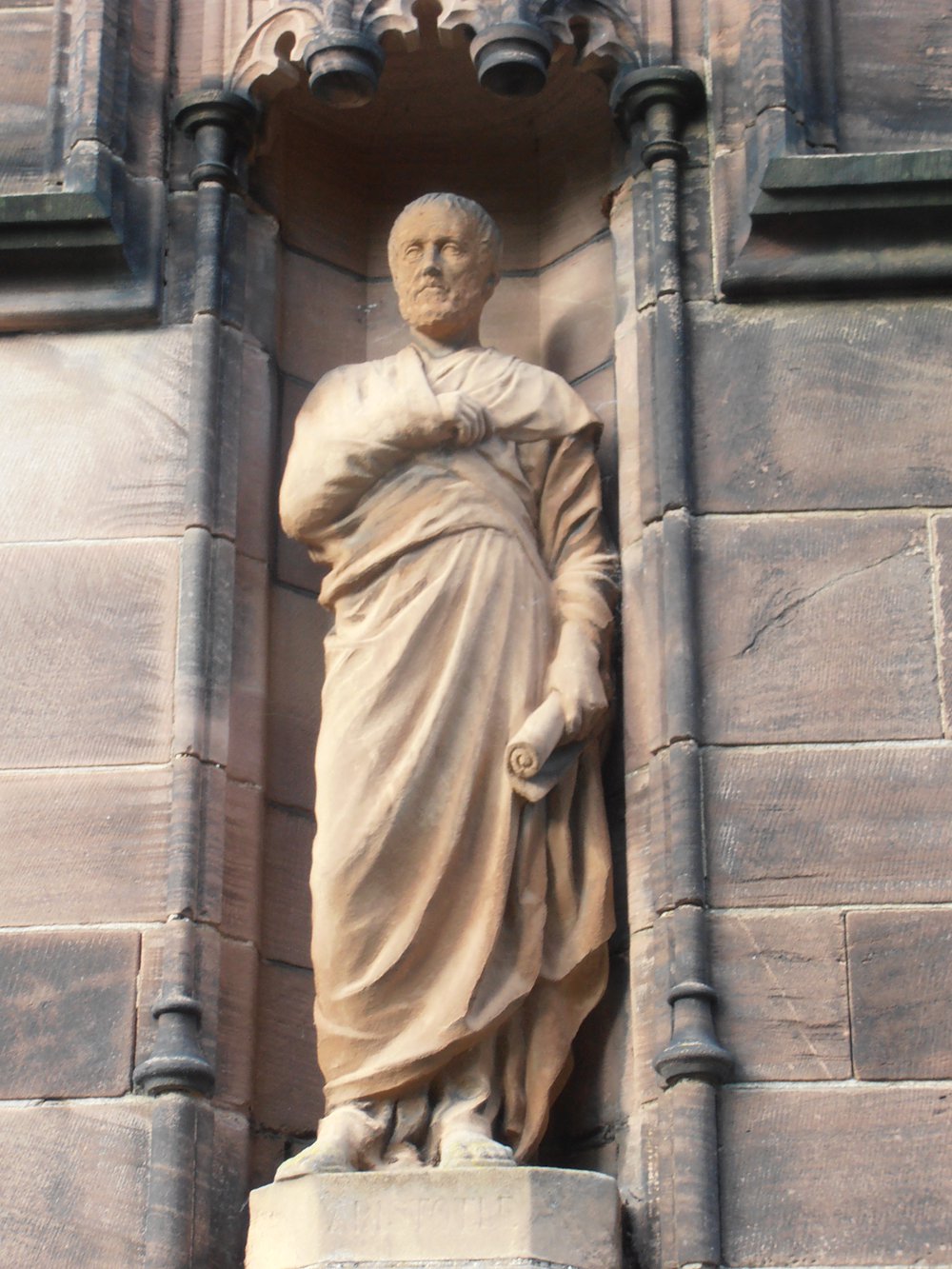 Stone statue in niche, Gladstone's Library, Hawarden, Wales, 1899
6. Bronze Statue at the University of Freiburg, Germany, 1915
The bronze Aristotle statue at the University of Freiburg in Germany, dating to 1915, is a strong example of an academic public sculpture. Bronze has a very different feeling from marble or stone. It feels serious, durable, and historic, especially when the surface develops a dark or aged patina.
A patina is the surface color or finish on bronze. It can be dark brown, black, greenish, or other controlled tones. Patina affects the whole mood of the sculpture.
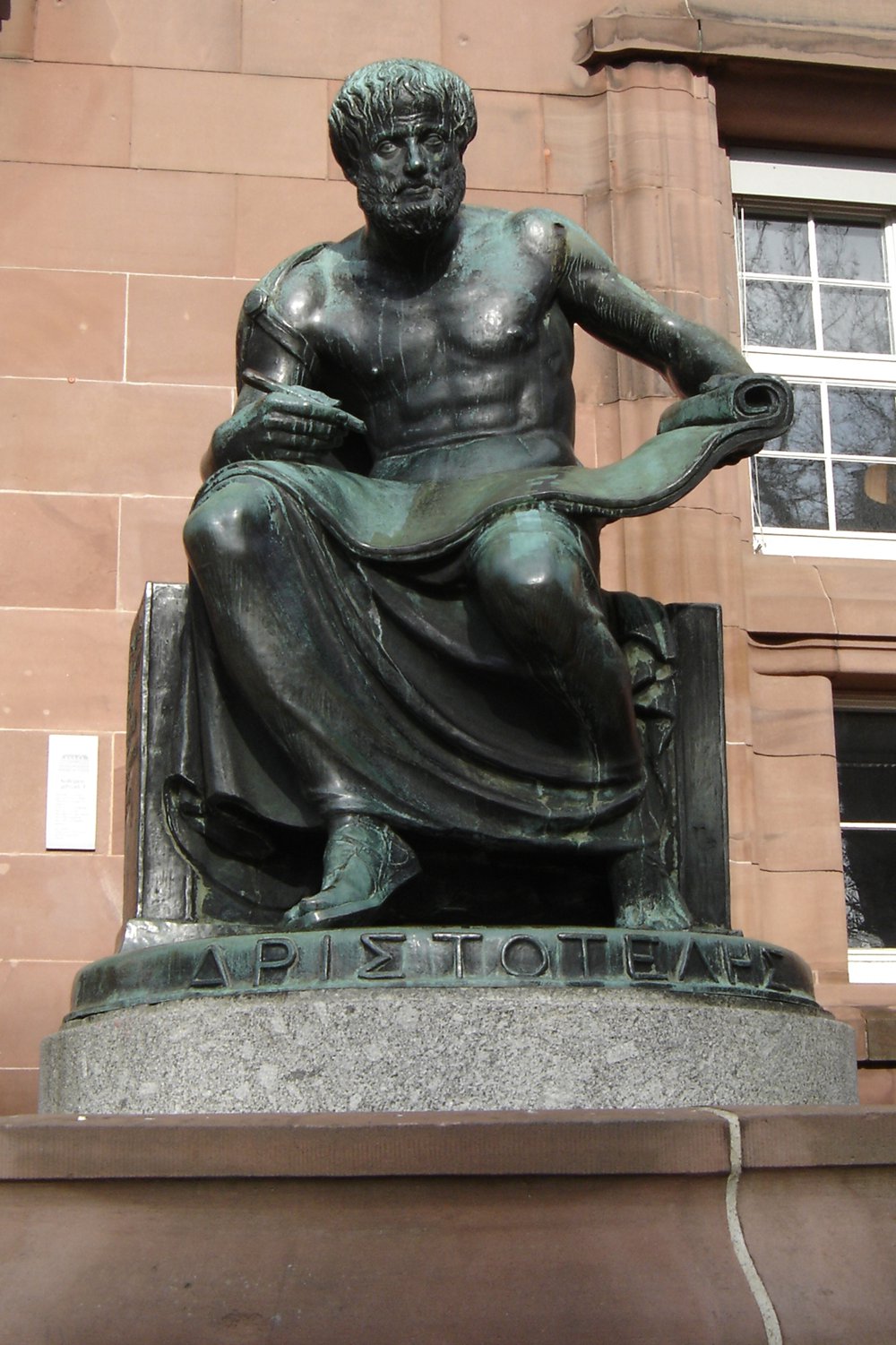 Bronze statue, University of Freiburg, Germany, 1915
Custom Aristotle Busts and Full-Body Philosopher Statues
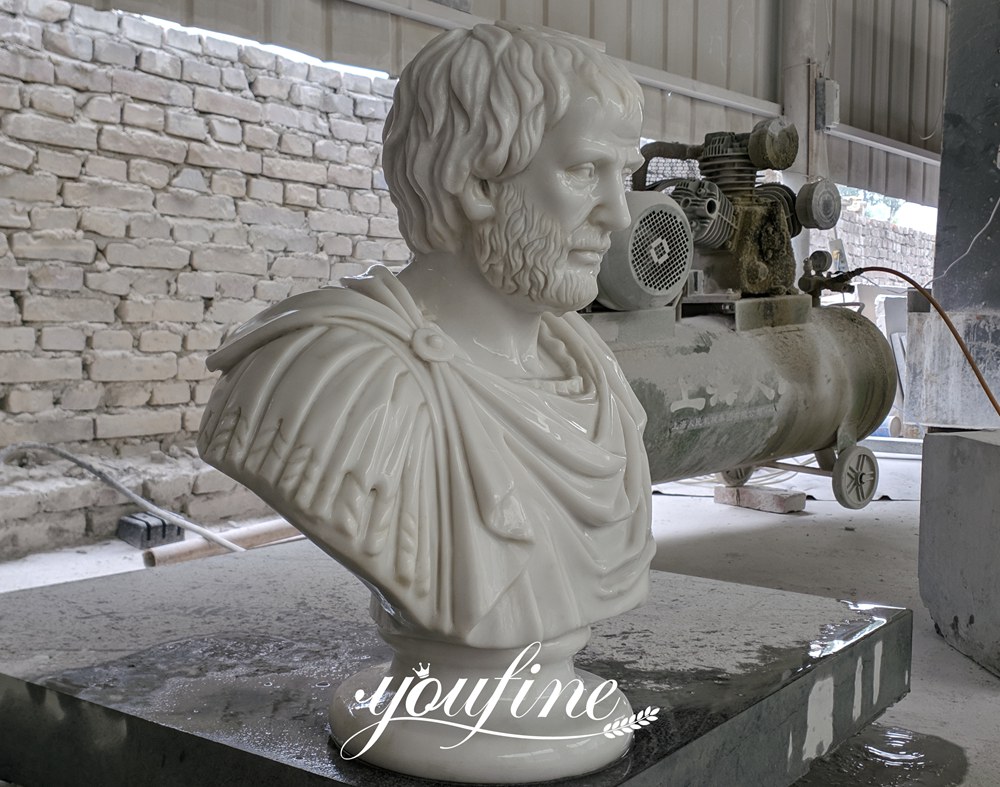
The factory I work with has customized many philosopher busts, and Aristotle is one of the subjects that buyers often like for study rooms and academic interiors. A bust is easy to place, meaningful, and not too demanding in space. Customers who want a classical intellectual feeling often choose philosopher busts for bookshelves, desks, cabinets, or reading corners.
The factory has also made full-body philosopher statues for campus projects. In my view, this type of sculpture is especially suitable for schools and universities. A full-body Aristotle can stand as a symbol of knowledge and education, while also improving the cultural character of the campus environment.
For custom Aristotle sculptures, common requests include:
- Aristotle bust for a private study
- Bronze-style Aristotle bust for an office
- White classical bust for a library
- Full-body Aristotle statue for a school
- Philosopher sculpture group for a campus
- Relief with Aristotle and other thinkers
- Outdoor statue with pedestal and name plaque
If you are planning a project, the most useful first step is to define the display space. After that, you can select the material, size, and style more clearly.
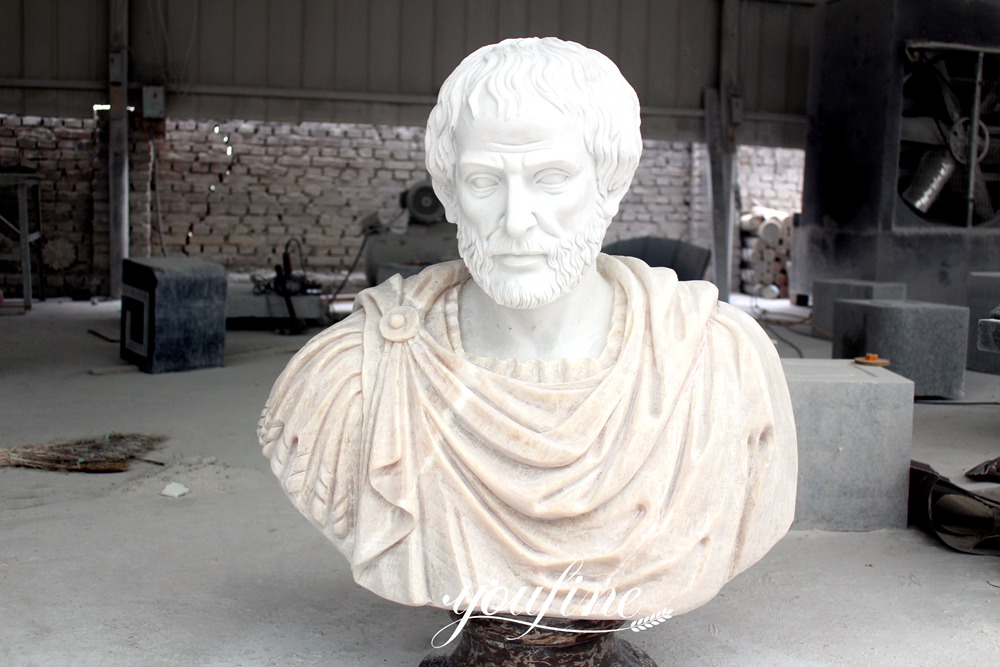 white Marble Aristotle Bust
Conclusion
Aristotle statues remain popular because they carry a strong meaning. They are not only classical decorations. They represent wisdom, learning, science, discipline, and the deep roots of education. From Roman museum copies to library niche statues and university bronze sculptures, each famous Aristotle artwork shows a different way to express intellectual dignity.
If you are choosing an Aristotle sculpture, start with the space. A study may need a bust. A library may need a relief or formal statue. A campus may need a full-body bronze or stone sculpture with a strong base. Once the location is clear, material, size, finish, and reference style become much easier to decide.
If you need a custom Aristotle bust, full-body philosopher statue, or campus sculpture, you can contact YouFine with your size, material, location, and reference style. I can help you think through the practical details and prepare a sculpture plan that fits your space.
FAQs
What is the best type of Aristotle statue for a private study?
From my experience, a bust is usually the best choice for a private study. It has enough detail to show Aristotle’s character, but it does not need much space. A bust can sit on a bookshelf, desk, cabinet, or small pedestal.
Is bronze or marble better for an Aristotle sculpture?
It depends on the location and style. Bronze feels formal, strong, and suitable for outdoor or campus use. Marble feels classical, refined, and elegant, especially indoors. For large public projects, I would compare material, weight, maintenance, and installation before choosing.
Can an Aristotle statue be customized for a school campus?
Yes. Aristotle is a very suitable subject for a campus because he represents knowledge, science, logic, and education. A full-body statue, large bust, or philosopher sculpture group can work well in a school entrance, courtyard, garden, or library area.
What details are most important in an Aristotle bust?
The face is the most important part. The beard, hair, forehead, eyes, and expression should feel thoughtful and mature. If these details are too simple, the bust may lose the intellectual character that makes Aristotle recognizable.
Can a relief of Aristotle and Plato be used instead of a statue?
Yes. A relief is a good choice when wall space is available, but floor space is limited. It is also useful for educational spaces because it can show Aristotle together with Plato and create a stronger historical story.
What should I prepare before ordering a custom Aristotle sculpture?
I suggest preparing the installation location, preferred size, material idea, reference images, and whether the sculpture will be indoor or outdoor. These details help the sculptor understand the project and avoid unclear expectations.