




A lion sculpture can welcome visitors, mark an important entrance, or lend a building a sense of history. Yet the lion at a Chinese temple gate and the one on a European façade tell different stories. In China, an animal introduced from afar became a symbolic guardian shaped by Buddhist belief and local artistic traditions. In the West, lions appeared in ancient religious art and later became familiar emblems of rulership, courage, and civic identity. Looking at their origins and changing uses helps explain why both traditions still have a place in contemporary decoration.
How Did Lion Sculptures Originate in China?
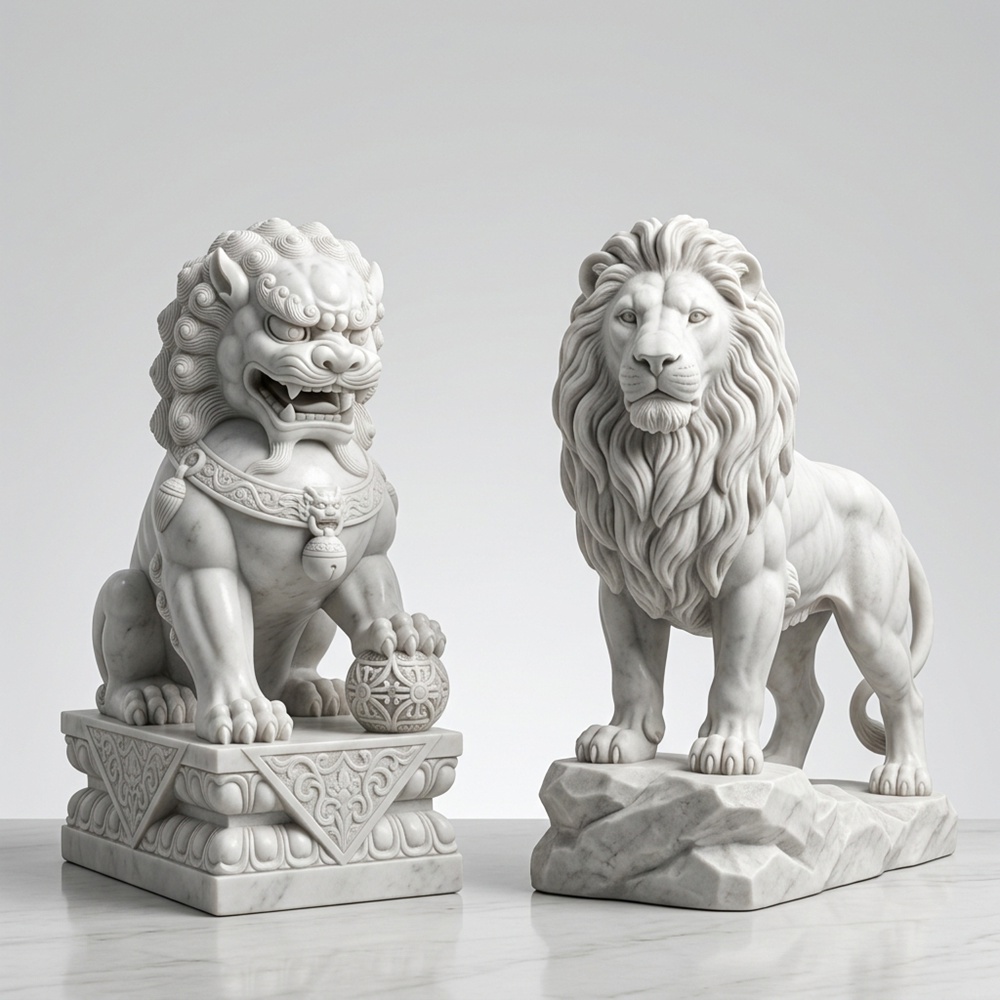
Lions were not native to China. The two source studies describe their arrival through exchanges with regions to the west; one cites a record of lions presented as tribute in AD 87. Because most people would never see a living lion, Chinese sculptors did not simply copy nature. They drew on descriptions of its powerful appearance and on familiar images of other animals and mythical beasts. Over time, the imported lion became a distinctly Chinese artistic figure.
An early surviving example is the pair of stone lions associated with the Wu family shrine in Shandong. An inscription dated AD 147 identifies the carvings as lions. With raised heads and open mouths, they convey the imposing presence that later generations continued to seek in guardian figures.
Buddhism gave the lion another layer of meaning. The lion appears as a protector of the Buddhist teaching and as the mount of Manjushri, the bodhisattva associated with wisdom. Buddhist imagery placed lions beside or beneath sacred figures; examples appear in cave temples such as Dunhuang, Yungang, and Longmen. As Buddhist ideas met Chinese traditions of auspicious and protective creatures, the lion took on a role extending from religious spaces to tomb approaches, gateways, and homes.
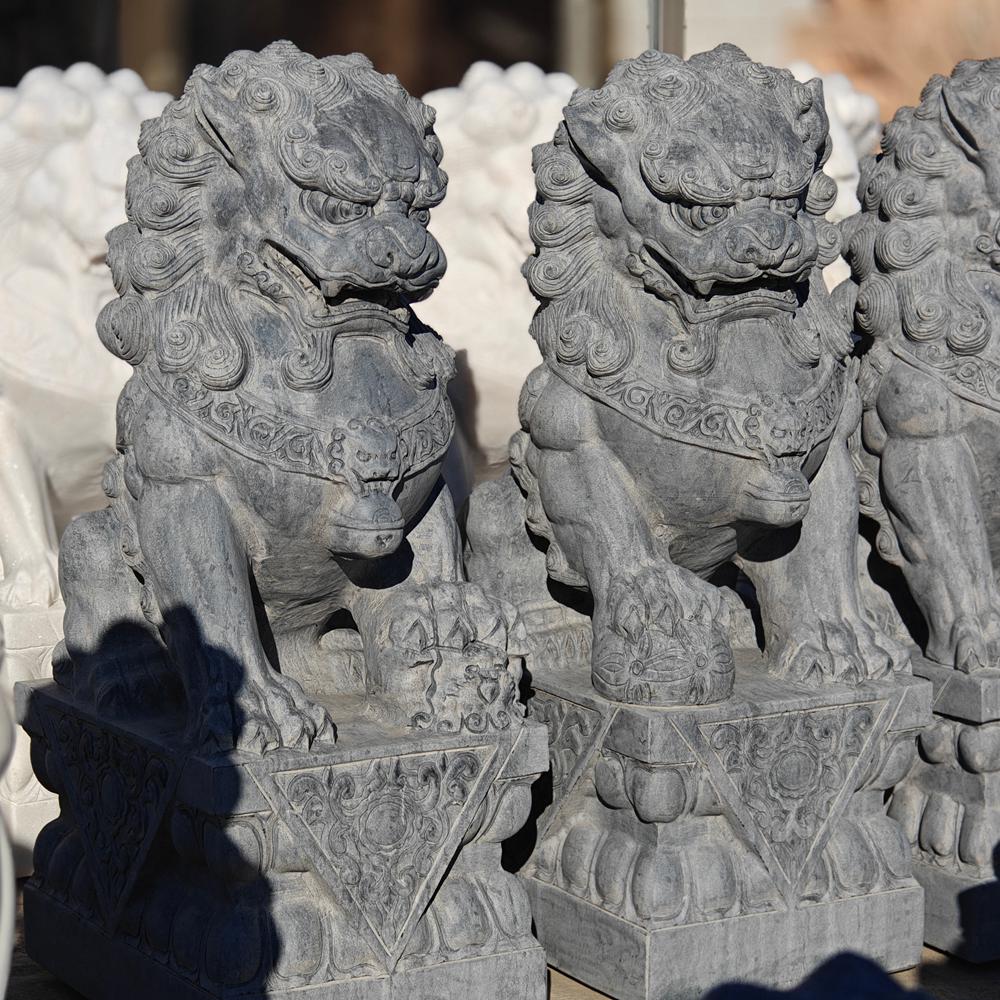
Chinese artists gradually emphasized expression and symbolism over anatomical accuracy. They enlarged heads, shaped curling manes, added bells or decorative collars, and sometimes gave their lions a cub or an embroidered ball. The result was not an attempt to reproduce a wild animal. It was an image designed to communicate strength, protection, and good fortune.
Where Did Western Lion Sculptures Come From?
The studies trace early lion imagery in Western and neighboring artistic traditions to ancient Egypt, Mesopotamia, and Persia. Associated in some contexts with solar worship, lions also guarded temples, palaces, and tombs in visual form. Their commanding posture suggested that a powerful presence stood watch over a significant place.
As architectural sculpture developed, the lion remained a versatile subject. Its form could be carved as a freestanding figure or integrated into walls, columns, gateways, and monuments. In the English-speaking world, the lion became a familiar emblem of bravery and authority: the expression “lion-hearted” still conveys exceptional courage. Lions also became prominent in British heraldic imagery.
Western lion sculpture has religious and civic meanings as well. In Christian art, the lion can carry different associations according to context. Venice offers a particularly recognizable example: the winged lion of St. Mark appears on the city’s monuments and architectural details. Its wings and book make it more than a naturalistic animal portrait; it is a symbol tied to the city’s religious and cultural identity.
What Do Chinese and Western Lions Symbolize?
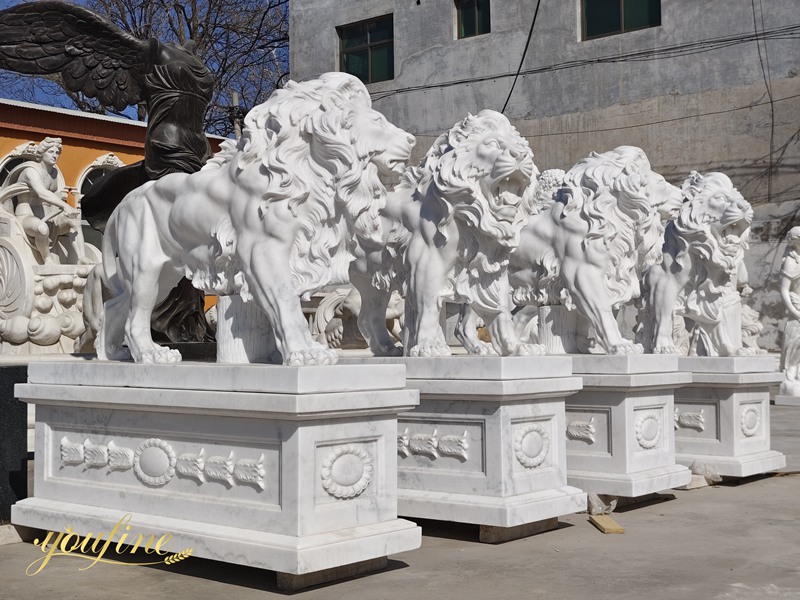
Both traditions associate the lion with strength and dignity, but they express those ideas differently. Western sculpture has often favored recognizable musculature, a full mane, and an alert or forceful pose. Even a fantastic winged lion may retain the convincing body and bearing of a real animal. A lion may suggest courage, royal power, watchfulness, or collective memory, depending on its setting.
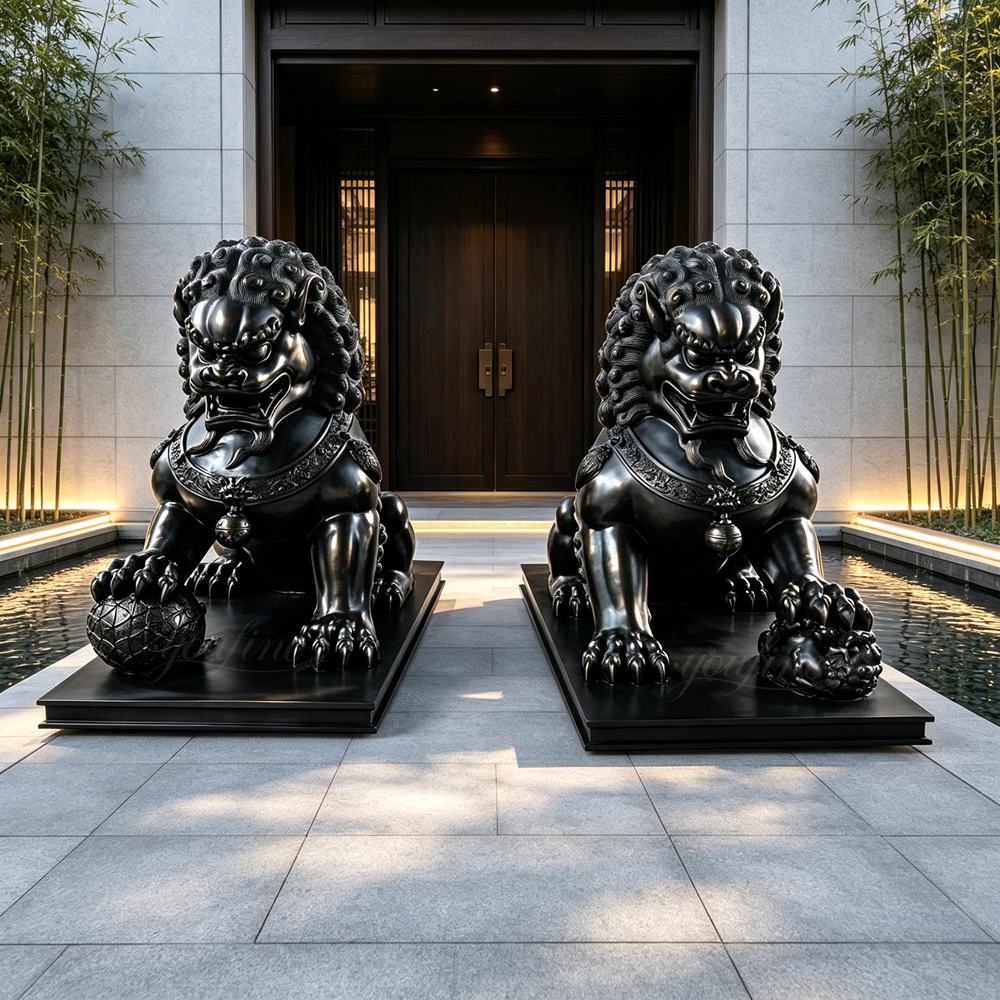
Chinese lion sculptures typically make meaning through stylized features and carefully arranged pairs. A traditional male lion may rest a paw on an embroidered ball, a sign of authority and command. The female may be shown with a cub, expressing care for the next generation. Together, they create a balanced image of guardianship at an entrance. Specific details vary by period and region; not every pair follows the same pattern.
Their expressions changed across centuries, too. The studies describe Tang tomb lions as broad, muscular, and imposing. Later Song examples became gentler in appearance, sometimes with bells or tassels. Regional traditions brought further variation: some northern lions emphasize mass and strength, while examples from Jiangnan can be lively, animated, and attentive to facial expression. These differences remind us that there is no single Chinese lion style.
A sculpture’s site also changes its meaning. On a Buddhist monument, the lion may convey protection of the faith. Along a tomb approach, it can honor and guard the deceased. Beside a residence, it can express a wish for security and good fortune. In a Western memorial, a lion can even evoke sorrow rather than triumph: the Lion Monument in Lucerne uses the animal’s form to commemorate fallen Swiss Guards. The same subject can therefore speak with remarkable emotional range.
How Did Lions Become Architectural Decoration?
In China, lion figures moved well beyond temples and imperial tombs. Carvers placed them at gateways and on bridge balustrades, door supports, column bases, and other building elements. The lions of Beijing’s Lugou Bridge show how a functional architectural feature can become a setting for imaginative carving: large lions on the posts are accompanied by smaller figures in varied poses. In homes and courtyards, lion motifs also appeared on carved stone details, woodwork, ceramics, and everyday objects.
Western architecture likewise gave lions both freestanding and integrated roles. They could stand at a gate or occupy a niche, but also appear on façades, doorways, cornices, fountains, monuments, and other civic features. A realistic figure can stand out against the straight lines of masonry, while a winged or heraldic lion can connect a building to a particular story or institution. Materials such as stone and metal allowed artists to develop either a solid, monumental presence or fine surface detail.
This decorative history is more than a catalogue of places to put a statue. The strongest examples relate form to setting. A solemn guardian belongs to a different environment from a playful garden figure; a historically inspired entrance pair calls for different proportions from an abstract sculpture in an open plaza. The second source study warns that thoughtlessly repeated or poorly made lions can lose their cultural meaning and sit awkwardly in their surroundings. Design works best when the sculpture, the building, and the intended message belong together.
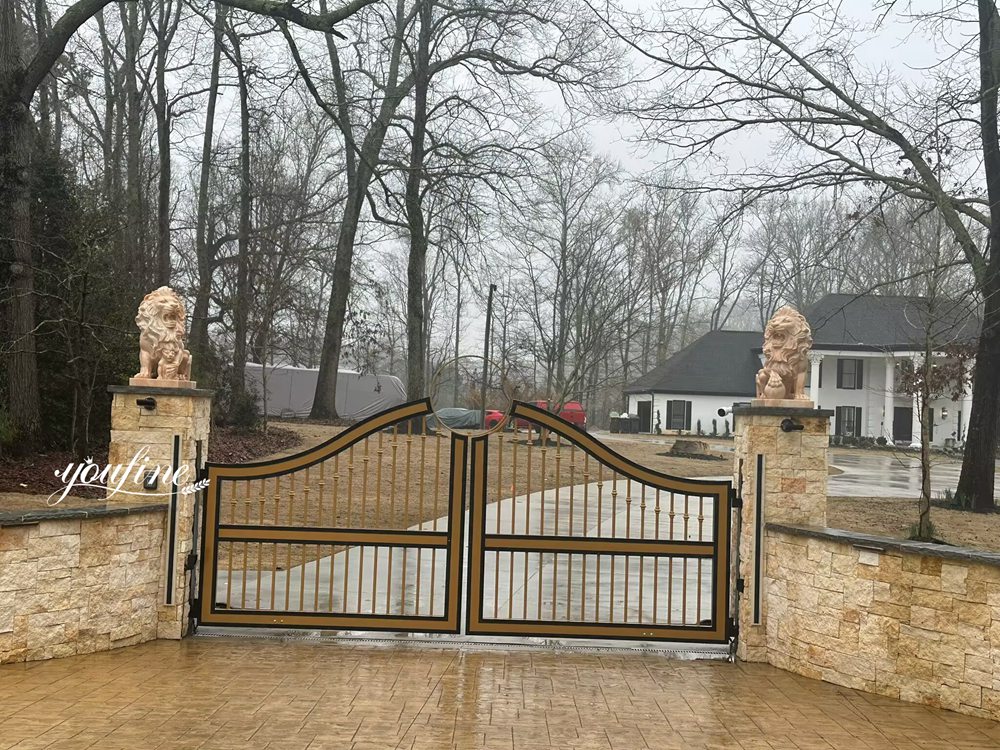 Feedback from a U.S. Client on Marble Lion Sculptures
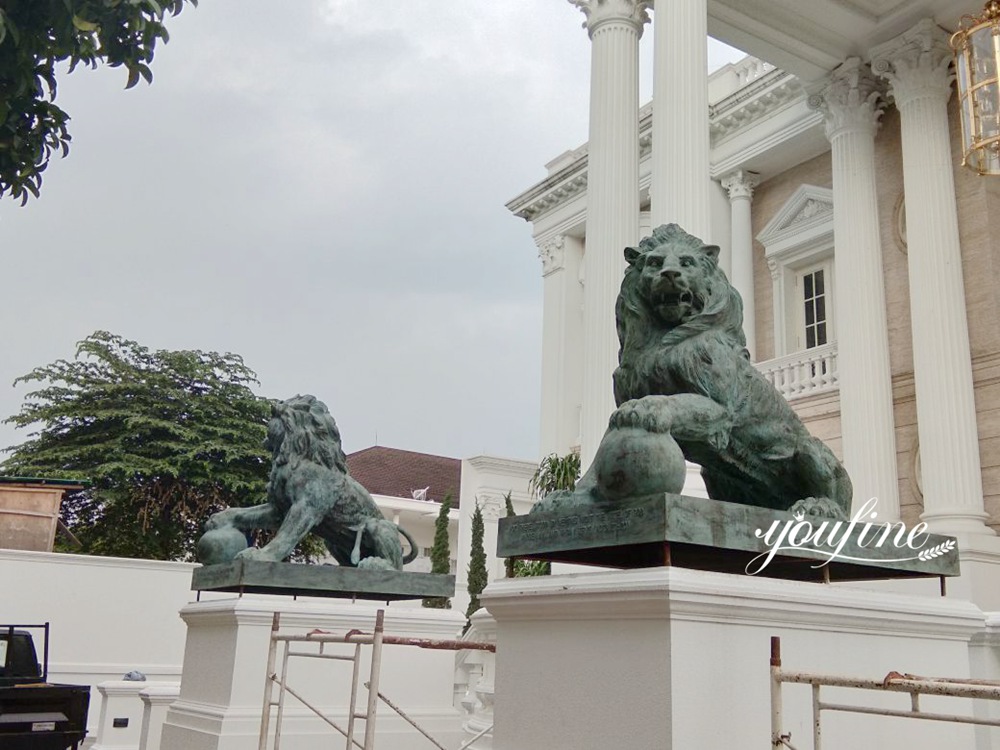 bronze lion with ball statue feedback
Why Are Lion Sculptures Still Popular Today?
Lion sculptures continue to appeal because they bring a recognizable silhouette and a sense of welcome and protection to a space. A matched pair on either side of an entrance can frame the doorway and give arriving visitors a clear focal point. Chinese-style guardian lions may suit an entrance that draws on traditional Asian architecture; naturalistic or contemporary lions may complement a different façade, courtyard, or landscape. The choice should reflect the scale, style, and character of the site rather than follow a fixed formula.
Material is part of that decision. A marble lion statue can offer a weighty, enduring appearance; metal can support a different finish and level of detail. Traditional carving, restrained realism, and more modern interpretations each create a distinct impression. Whether the setting is a residence, hotel, commercial entrance, garden, or public space, a thoughtfully chosen lion can link decoration with a story that reaches across cultures and centuries.
YouFine offers lion sculptures in a variety of materials and designs, from traditional guardian pairs to other decorative styles. If you are planning sculptures for both sides of an entrance—or exploring an idea for another space—contact YouFine to discuss the look, material, and dimensions that fit your project.
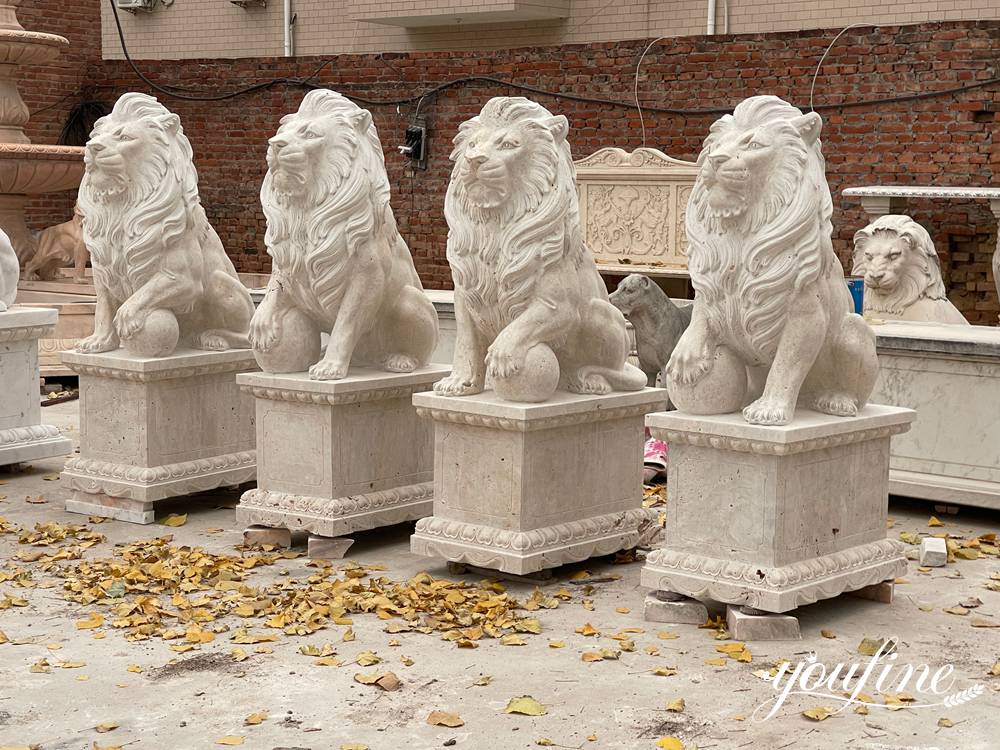 lion marble statue in stock